
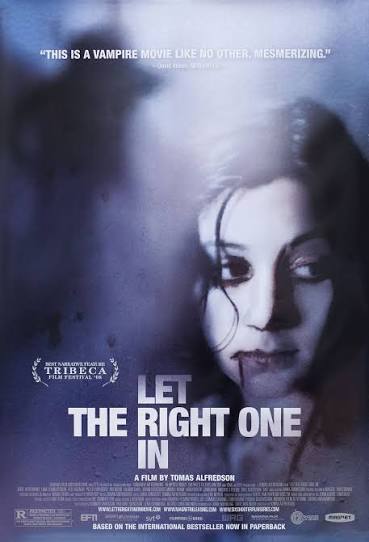
Imagine for a second living next door to a vampire. Let me say that again. Imagine that your next door neighbour is, yes, a vampire. And somehow… you knew?
Not just that. They appear “attractive” to you. They appear to be the same age. They don’t appear to be scary at all. And yet, at full moon, when blood lust is at its peak, they need to feed.
Now imagine all this taking place in a suburban neighbourhood in Sweden.
What I’ve just described to you is the plot of just about any vampire story. Boy meets girl, or girl meets boy. Boy/girl turns out to be a vampire. Will they. Won’t they. Can they.
More than just a “vampire” film
Tomas Alfredson’s eerie retelling of an age old story isn’t your typical “falling in love with a vampire” teenage drama. It’s so much more than that.
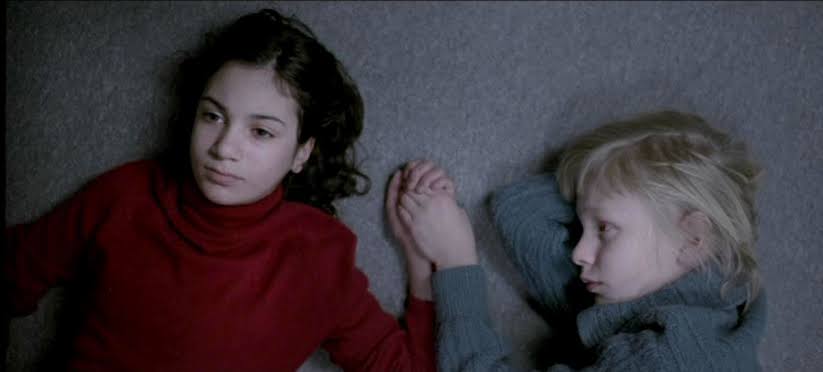
To begin with, Alfredson has done away with all the usual cliches. The fangs. The jump scares. The cheesy drama.
The fearful aspect of the film actually kind of creeps up on you in the most unexpected way. So much so, you don’t actually think about it until after you’ve seen the film.
Packed with moral ambiguity – a running theme throughout film club – it provoked quite a few existential questions.
Questions like: who really are the monsters? Take your pick: the negligent parents who don’t really know what their kids are up to behind closed doors. The aloof teachers who just stand by and let horrors aplenty unfold without consequence. The estranged, alcoholic father who’s all but given up on his family. Or – probably the most obvious one – the school bullies who go out of their way to make the misunderstood kids feel uncomfortable.
Note that in my list I haven’t mentioned vampires. Not once.
And that’s because, to me at least, poor Eli isn’t a monster at all. They are a victim of a great atrocity (there’s no real backstory in the film, but there’s a book for that) committed centuries prior. And they’re living with those consequences, doing whatever they can to survive. This is captured perfectly in this exchange between Eli and Oskar:
Oskar: I don’t kill people
Eli: No, but you’d like to. If you could… to get revenge, right?
Oskar: Yes.
Eli: Oskar, I do it because I have to. Be me, for a while.
Eli’s moral ambiguity
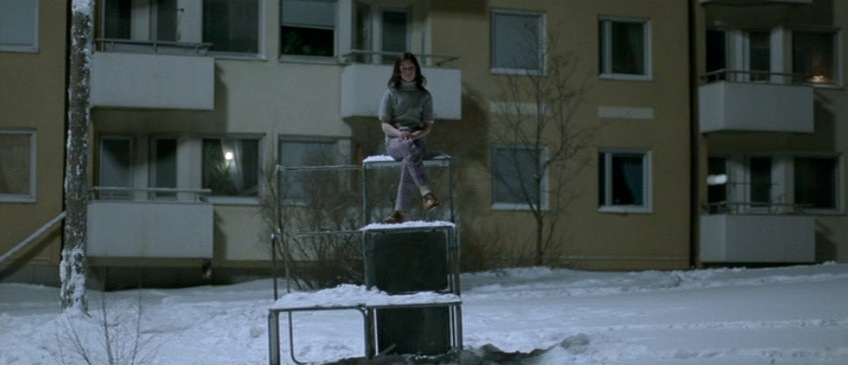
I’ve established that Eli isn’t inherently bad. They kill because they have no choice. If they don’t get blood, they can’t survive. But does that mean Eli’s… good?
Who’s to say. There are a couple of instances where Eli does kill. And it’s not to feed. I won’t say much more about this as those scenes (and the film) are worth watching, but it does beg the question: has Eli bent their rules before? Or are they doing it just for Oskar?
One thing’s for certain. The divide between good and evil is blurred. And I think I can capture it in a short verse inspired by the film:
Twelve in all perpetuity,
Thirteen I’d never been,
Yet all the world’s atrocities
With these eyes, I have seen
Unseen have I remained
Though strange I may seem
Only those stranger still
Will pay me any heed.
Centuries I have roamed this world
Centuries more I expect to roam
And though you may be twelve
And perhaps someday thirteen
I’ll keep you by my side
Until you perish, my sweet.
One last thing. If your neighbour turns out to be a vampire, give them the benefit of the doubt. They’re not the monster you should be afraid of.
 Just Me Lakhani