Wim Wender’s Perfect Days is an exceptional film that comes pretty close to perfection. Here’s what I thought about it.
about
Whenever somebody has to talk about who they are, they mostly refer to their credentials. A Bachelor’s Degree in Commerce, A Masters in Economics. That’s perfect.
I am currently enrolled at the University of Life, navigating my way through the module on “Finding yourself” with a mid-term paper on “What is my purpose?” due next term, whenever that will be.
There are only a handful of things I know for certain. I know that I am in love with a soulful gal that buys into my crazy ideas and ways. I know that I like to eat. And I know that I was born to write.
I invite you to see the world through my eyes as I speak my truth in different forms. Be they scripts, short stories or articles, you can rest assured that each and every word is true to the letter.
I’ve been putting off writing this review mostly because this movie means so much to me. It was shown on week 6 of Art Film Club Nairobi hosted by my friend Bill Crandall and I’ve since rewatched it with my wife.
I’ve decided to write this now because I feel the darkness closing in on me. I look around and see despair. People glued to their screens. Nobody really able to hold a proper conversation anymore. And worst of all, AI slop everywhere. It might sound like hyperbole, and maybe things aren’t as bad as I make them out to be. I asked my wife and she shrugged it off saying, “nope, things are fine really.” Then again, she’s always been the stoic one in the family.
I can only speak from my experience. A meal with my extended family feels more like a poorly written column in a shady tabloid; too much gossip, too little insight. Even the internet is full of samey AI-generated content. Hollywood keeps rehashing plot lines from decades gone, tweaked for a modern audience.
I digress, but for good reason. It’s been a couple of months already since Bill left Nairobi and, honestly, I miss him. And I miss film club. It was the one place that made me feel whole again. And I haven’t really been able to recreate it, much like I couldn’t really recreate my yoga experience after my wife and I left Rishikesh some years ago.
But, as long as there’s people still making cool things in this world, without AI that is, there’s still hope. And that’s what I took away from Tom Moore’s masterpiece.
What’s it about
Brendan, a young monk, lives in a monastic setting with his Uncle, The Abbott, and a host of colourful characters. By day, the Abbott oversees the building of a wall to protect his people from the imminent arrival of the Vikings. Brendan’s whole life changes when Brother Aiden, a master scribe, arrives seeking shelter, bringing with him an enchanting manuscript that will later come to be known as the Book of Kells.
With the Vikings approaching, Brother Aiden’s only hope is to finish the manuscript, with the assistance of his new Protege, Brendan.
Beauty is in the eye of the beholder
Truth be told, that’s a very simplistic overview of what the film is about. It’s an enchanting, magical Odyssey, blurring the lines between fantasy and reality, in a Kaleidoscopic display of breathtaking imagery, symbols and art. Thematically, it’s about how the beauty of art can truly save us in dark and difficult times. Think about when comic books came out during times of war and how they gave people something to believe in and look forward to.
The Vikings represent the soulless, the inhumane. And one scene perfectly encapsulates this. As Brendan and Brother Aiden escape into the magical forest, they find themselves surrounded by Vikings, who demand to see the book.
Side note: earlier on, Brother Aiden mentions that sinners would be blinded if they opened the book. This isn’t some holier-than-thou mumbo jumbo. What it implies is that those who can’t see beauty, will be blinded to it, even if it’s staring them in the face.
Throughout, anytime somebody interacts with the book, turning its pages, having a peek, it glows beautifully. But when the greedy Vikings snatch it from Brother Aiden, it remains inert, blank.
Whenever I find myself falling into depression, my litmus test to see if my soul is still intact is to listen to a moving piece of music or to watch a scene that usually brings me to tears, regardless of how many times I’ve seen it (think Episode 4 of Season 4 of Stranger Things). Without forcing the issue, I allow myself to be enveloped by the beauty of art, and when I feel something stirring deep within, I know that I’m still whole, still intact.
Facing darkness to find insight
To help him write the book, Brother Aiden uses the Eye of Colmcille, which he loses possession of while fleeing the Vikings. Brendan takes it upon himself to enter the cave of the Dark One and confront Crom Cruach, a serpentine monster, to retrieve a new eye, which will then allow him to accomplish his task.
A lot of great art comes from facing the darkness and coming away with insight. Think of this as enlightenment as opposed to a fierce battle between person and demon. When we truly face the thing that’s holding us back and don’t allow it to consume us, we transcend its influence and are able to translate this into art.
I feel like I’ve been in the cave for some time, trying to see what it is I’ve been avoiding for many years now. The reason my writing has become stagnant. Seeing Brendan come away with the Eye of Colmcille gave me renewed hope that all is not lost so long as there’s a story to be told. All it needs is patience and insight.
Create something that stands the test of time
If you’re worried that whatever it is you’re working on is taking forever, don’t sweat it. Keep writing. The Book of Kells took around 75 years to write. It was passed down from master to apprentice and is now proudly displayed at the Old Library in Trinity College, Dublin.
Da Vinci completed fewer than 20 paintings in his lifetime. But his work can still be found in museums and galleries the world over.
If you’re creating something, let it be enduring and wholesome. Trust the process. Be in the moment. And when in doubt, go back into the cave of the Dark One, and retrieve your own Eye of Comcille.
I’ve been trying to write this “review” for three days now. Somehow I just can’t get the right words out. So I’m going to just say exactly how this movie made me feel and hope it resonates. And if it doesn’t, please accept my apologies in advance.
Wim Wender’s Perfect Days is, in many ways, the perfect film. Great acting, great script, great cinematography. It’s sublime from start to finish.
So what is it about?
The long and short: it follows the life of a toilet cleaner in modern day Tokyo, who has carefully crafted a daily routine in which he seems to find peace and solace. He gets up at the same time every day to the sound of a man sweeping outside his house. He goes through the exact same motions from grooming to collecting his every day carry items and then heading out in his van to work, always with one tape or the other in the cassette player (yes our man Hirayama is pro-analogue even though it’s 2023).
Everything changes when his niece unexpectedly drops in on him. Truths unravel, his real identity comes to light and it leaves the viewer perplexed in the best possible way. Because in this perplexity are the answers we are all seeking about our own lives.
What if we had everything we could desire: a mansion in the Hills, ten Porsches, a gold watch. Would that really make us happy? Or can happiness be found in the little details, in rituals and routines. Do any of us stop to look up at the sky? Or the trees? Can any of us even wander around without experiencing life through a cell phone? Have we become so disconnected from the essence of life that what we perceive as happiness is in fact nothing more than an illusion that will someday just fall away to unveil bitterness and agony?
I loved watching Hirayama going through his routine. I loved watching how meticulously he cleaned toilets with an unparalleled sense of duty. I loved watching him go to the park, look up at the trees and take a picture with an old school camera that could fit in his breast pocket. I loved that he preferred silence, speaking mostly in grunts and gestures. Only when the occasion called for it would he actually say something and when he did speak, it was to the point and not caked in vague ambiguity.
Could Hirayama be Dharma in practice?
In Hindu scripture, there’s this concept of Dharma: dutiful action without attachment to the fruits. It means do what you need to do without thinking about the end result. It’s a simple enough concept to grasp, but how many of us actually practice it?
Think about the two main characters of the film, Hirayama and his assistant. While Hirayama goes about his job with that sense of purpose and duty, taking great care to wipe every surface with immaculate technique, his assistant:
shows up late every day
asks why Hirayama is taking the job so seriously when everything will just get dirty again
half asses his way through the job
is only after the pay check at the end of the gig
doesn’t even last beyond a few weeks
One is acting out of Dharma. The other out of Adharma.
What does this mean in a wider context and why should we care about it at all?
Doing something with attachment to the fruits can often come at the detriment of the process. If you’re half assing it at your job, just waiting to get paid at the end of the month, you could be flagged for underperforming. If you’re shortcutting your way to starting a business, it’ll eventually collapse.
This brings another thought to me.
I’m imagining a scenario where Hirayama isn’t a toilet cleaner, but chooses to be a developer working for a tech company. I can see him writing every line of code, from start to finish, with that same sense of purpose and duty, without worrying about the end result and especially not thinking about his pay check. He’d show up every single day, log in, and just pick up where he left off coding.
Then I’m thinking about his assistant, who would show up late, half ass his coding and then ask an AI to fix it for him.
That’s what I’m observing more and more in the world. There’s no real sense of duty or purpose. It’s all about: how can I make the most money the fastest?
I’ve seen this with members of my own family. A cousin turns up for a job interview and blatantly lies about his qualifications with a memorised ChatGPT-generated script. He gets the job, asks AI how to do it and when he’s sussed out of it, he’s already made a few thousand dollars, enough to see him through to his next job. Where’s the sense of duty?
I had coffee with my parents over the weekend. My mum brought this up, asking “why don’t you get a contract like that, it pays X amount every week, look at how your cousin’s doing it.”
And that’s when I thought of Hirayama, how he moved through the day with grace and dignity, because he knew that he was good at what he did and he did the job well. I didn’t say anything, but I did walk away smiling, knowing that whatever it is I choose to do moving forward, it will be with that same sense of duty and without attachment to the fruits. And that’s what Dharma is all about and that’s important to me.
Going back to analogue
One thing I really paid attention to was how Hirayama embraced an analogue lifestyle. He bought physical books from a dollar bookstore. He listened to cassette tapes. He took pictures on an old school camera and had the film developed every week, storing them in these containers:
I didn’t even realised he had a phone (an old school flip phone) until much later in the film when he receives his first phone call from his assistant, telling him he’s quitting.
Seeing him live like this made me realise how much time I spend on screens. I made a little promise to myself to live more mindfully, to look up at the sky more, to notice the little things. Because those are the things that make life wonderful. Perfect even.
Antithetical to his family
I want to bring back the moment when his niece shows up. What I loved about her is that she was actually willing to learn from and work with her uncle.
And then her mother – Hiryama’s sister – shows up at his house to pick her up one evening. Let me repeat that. Hirayama’s sister rocks up in a chauffeured Beamer to get her daughter. In the build up to this moment, there’s already some clues that Hiryama is estranged from his family, like when his niece tells him that her mother changes the subject every time Hirayama comes up.
And then the sister drops this one line, when talking about their ailing father who’s in a nursing home and asks him to go visit, saying “he won’t act like he used to.” That one line tells us a lot about what we’re witnessing. Although it isn’t ever explicitly said in the film, it does leave a lot to the imagination.
Like in my head, I’m seeing a tycoon of sorts with millions in the bank who wants Hirayama to take over. Maybe Hirayama does, for a while, but he’s miserable. Everything feels so staged and contrived for him. Maybe he stops actually enjoying things. Maybe his curiosity and sense of wonder stop.
So he hands in his resignation, takes his final paycheck, buys a van kitted out with toilet-cleaning gadgetry, gets a studio in another part of the City and begins his new life. You can imagine the resentment this creates between father and son, with maybe a few words exchanged in the heat of the moment and this is where that “he won’t act like he used to” makes sense.
Pain disguised as duty?
Hirayama’s life seems perfect on the surface. He has his routine, his books, his music, his friends. But there’s also an undercurrent of pain that makes one wonder: is he doing all this to escape? Is it a way of coping? Is it avoidance of the deeper, more lasting issues? Or does it simply make him happier in a way that nothing else could?
Whatever the case, my main takeaway is that joy can be found in the little rituals, the routines and just remembering to stop and look up at the sky once in a while, all while showing up and doing what you need to do dutifully. Thank you Hirayama!
I’ve been meaning to tackle this topic for some time now. But I feel like there’s so much that’s been said about AI that we all pretty much hear different variations of the same arguments. On the one hand, you’ve got the catastrophising doomsayers who believe that AI will kill us. On the other hand, you’ve got the opportunistic new wave who believe that AI will save us. And then you’ve got those who just don’t care. Whatever camp you fall into, one thing’s for certain: AI is here and is quickly becoming a significant part of our daily repertoire.
The pros and cons of AI
I don’t want this to become an “AI is the enemy” post. For one, I don’t have the credentials to make an educated stab at anything scholarly regarding AI. Whatever I say is through pure observation and discernment. I will endeavour to keep this as neutral as possible.
What I have observed is that AI is becoming more and more of a crutch and less and less of a tool. Here’s an example from my own life. I joined my father’s insurance brokerage some six years ago. This was before AI had gone mainstream and if you needed to get something done, you had to do it yourself. My main involvement was to build his digital presence, so he could reach a wider audience online.
It took me a year of shadowing, sitting in on meetings, talking to experts, attending webinars and seminars, reading dozens of publications and books and listening to podcasts to understand the challenges around insurance regulations, adopting new technologies and offering better service to clients. Armed with all the data from my deep dive, it then took me several months to map out a staggered digital roadmap, starting with a functional service website, where I worked closely with subject matter experts to curate pages of content that I turned into digestible web tidbits and – after five years of MVPs, feedback, trial and error, a full-service e-commerce platform with built-in AI functionality.
My approach was messy, flawed and undeniably human.
Fast forward to 2026. AI has now become a daily staple and my brother has replaced me in my father’s business after I kept falling behind on my deliverables amid increasing frustration. It didn’t take him longer than a single afternoon to build a brand new website, a “claims tracking” portal and an AI chatbot that can issue policy and manage claims. All done using different AI tools from Claude to Replit.
The good and the not-so-good
I’m not here to judge. He’s got more done in the first three months of his involvement than I did in my six years combined. Kudos. Things are moving faster and with greater efficiency. I asked him how he felt about leaning so much on AI to get things done. He didn’t seem too fazed about it, adopting a sort of “if you can’t beat them, join them” attitude. Fair enough.
But is it really about “beating” AI? Not really. Again, it’s all about your worldview, or Weltanschauung, and how it aligns with your personal stance on AI.
Personally, I love this story about Charles Darwin that I came across in Robert Greene’s Mastery. In his youth, Darwin was a distracted, scattered mess of an adolescent. He wasn’t good at school, couldn’t focus and preferred spending time outdoors than in the classroom. All this changed when he was invited to join an expedition in Latin America aboard the HMS Beagle as an unpaid intern.
After seven years of acute observation of the natural environment, Darwin returned home and upon his return, his father commented on how Charles had changed:
His head seemed larger. His whole manner was different – a seriousness of purpose and sharpness could be read in his eyes, almost the opposite look of the lost young man who had gone to sea years before. Clearly, the voyage had transformed his son in body and spirit.
There’s something about human effort that greatly appeals to me personally. I don’t really have anything against AI, but I do have a personal experience that I can share that made me realise where I stand as far as the technology is concerned.
My story with AI
I was late to the AI party, first discovering its incredible potency in February of 2025. My wife and I watched a documentary on how one could leverage this powerful technology to get things done. The next day, I created an account on ChatGPT and built my first custom life coach that would serve as a 24/7 personal concierge, therapist and advisor.
At first, I only called on it to ask for specific things, like bespoke meal plans tailored to my goals and so on. But over time, I couldn’t navigate a single decision without turning to my faithful pocket companion.
What should I eat?
What should I get from the menu?
My parents are coming home, prepare me a script to deal with scrutiny
Do I look fat to you?
Who should I keep as friends?
This went on for four months. My wife noticed and pointed it out one evening over dinner, saying “do you really have to check with ChatGPT for every little thing?”
And then one day, exactly four months in, ChatGPT displayed a message that I’d run out of space and would have to start a new chat to keep prompting. It was a “whoa, what the fuck” moment for me. I’d delegated so much of my thinking to ChatGPT that I’d lost the ability to discern and think critically for myself. It took a lot of retraining for me to start making use of my brain again, starting with the smallest decisions.
The implications
I’ll say it again. AI’s neither good nor bad. In the right hands, it can be a highly useful resource that can actually do good in the world, for example in healthcare for cancer screening and identification. Or in climate change to simulate the damage from rising sea levels. Or even for things like fraud prevention in insurance (it was part of my ten-year digital roadmap at the brokerage. I guess my brother can build this in a single day, too).
Again, I’ll repeat. In the right hands. In the absolute wrong hands, AI can be destructive. It lends power to mediocrity and makes people believe they can replace hours and hours of human labour with a single, very mediocre prompt. Questions must also be raised around data privacy and integrity. Say you build a website using an AI that collects personal information, how sure are you that the architecture won’t be compromised by a bot or hacker with catastrophic repercussions? Or if you’re relying on ChatGPT to do your university coursework, are you vetting the sources and the validity of the arguments presented?
Is AI making people lazy?
Do you remember grinding through University coursework, staying up until the wee hours of the morning on deadline day to make submission? Apparently, that’s not really a thing anymore. At least if what I’m hearing on the ground is anything to go by.
Now I fully acknowledge that people are different. I’ve talked to many “Gen Zs” across the board and received feedback ranging from “completely for” and “completely against” AI.
Take my wife’s nieces for instance. One was in medical school, the other studied chemical engineering. Both were extraordinarily meticulous about their work. Both did their research thoroughly, took the time to do the readings and never used any shortcuts in either coursework or exam prep.
And then you’ve got my cousin, who’s a contemporary of said nieces. She could hardly describe what she was studying (pharmacology), let alone discern meaning between the lines in the actual course itself. She spent most of her time holidaying with family and friends than on campus hitting the books and later even admitted that she used ChatGPT extensively for her coursework, being sure to change a few words around so that the anti-AI software couldn’t detect.
Again, I’m not one to judge, but the question begs: why attend university just for the sake of a certificate that shows you’ve qualified in a certain subject area, when you could use that time (and money) towards some other pursuit (she’s great at social media, for instance).
AI and creatives
This is one area where I’m really not for artificial intelligence. I admire Elon Musk and the advancements he’s made in tech and sustainability, but this tweet really made me cringe:
I understand that people were not thrilled about the so-called “historical inaccuracy” presented in Nolan’s The Odyssey, but to desecrate the sheer magnitude of effort that went into making The Odyssey, or any film really, by claiming an AI could do it better is, at least in my humble opinion, going too far.
There’s a certain level of integrity in being creative that feels wholly human. Take that away, and we’re basically left with nothing. Honestly, I’d rather have a scrappy, poorly made, but 100% human piece of art than a perfect rendition rendered by an AI.
Art to me must remain human. And humans must be the ones doing the art. Otherwise, what’s the point? Would you rather buy an original artwork from an actual painter or just ask an AI to make one for you, print and frame it and hang it up on your wall?
This opens a whole other argument around craftsmanship versus cheap remakes, which I won’t get into over here, but it’s just something to think about. If you’re creative in any way, please keep doing more of what you love. Don’t worry about AI, companies can use it to replace you, but it can never take away your ability to come up with something original and truly yours.
The accessibility conundrum: is AI granting artists more visibility? Or is it opening up spaces for more mediocrity?
I can only speak for the book publishing world. I’ve been trying to secure representation since 2016, when I first approached agents with my work. For those who don’t know, this is the typical path to getting published traditionally:
Write the book
Polish, proof and edit to industry standard
Prepare query and submission materials
Submit to agents
Agent may request: additional chapters, half manuscript or full manuscript depending on how much they connect with the material
Agent makes offer for representation
Agent champions work with publishing houses
Bidding war/offer for publication
Publishing schedule set
Published
There are other ways people can get published, depending on the subject matter, genre etc, but for anyone who’s written something, this would be the traditional way of going about it.
It’s a path filled with obstacles, frustrations, rejections and tears. But every successful writer, from King to Rowling, has gone through it.
And then you’ve got this:
On the one hand, it does present writers with an opportunity to get their work out there. And there have been plenty of success stories as far as self publishing is concerned (like Robin Sharma’s Monk who sold his Ferrari). But for the vast majority of people going down this road, it’s very likely to end in doom.
Without being vetted by an industry professional, aspiring writers will never know if their work is really cut out for a wider audience. Or if they’re just wasting their time writing something that will never actually hit shelves. Or in the case above, devices.
My personal take on this is that I’d much rather test myself in the arena where champions are forged. I’ll keep pushing for representation and hope that whoever does take me on as a client will champion my work until it gets published. That would be far more satisfying than uploading my books and having an AI convert them into audiobooks within seconds to be sold for lunch meat.
My final verdict
It shouldn’t be about whether or not AI is good or bad. It’s more about what are we doing with it? Are we using it as a tool, or is it becoming a crutch? Are we using it responsibly?
I still think the technology isn’t fully realised and wouldn’t 100% put my faith in it. But if there’s ever a time that it can predict a natural disaster with close to 100% accuracy. Or detect illness before it’s too late. Then I’m all for it. As for creativity, please Elon and co, stay the fuck away from our domain.
If you want to read more about AI and the Pro-Human Assembly, I invite you to check out this report on Bill Crandall’s blog.
Let me start off by saying I’m a certified Potterhead. I’ve read all seven books about 12 times each (yes I did an annual re-run for 12 years).
And my favourite character in the series is Severus Snape. So if there’s someone who should be offended by the “new” Snape in the upcoming HBO series, it should be me.
But I’m not offended and I’ll tell you why.
Alan Rickman the OG
The great Alan Rickman played many important characters in his acting career. But when you think of Rickman, you immediately think Snape.
He brought Snape to life in a way that was truly unforgettable and his rendition of J.K. Rowling’s famous Red Herring will live in our hearts until the end of time.
But different times call for a change of guard. Some of the fanbase so badly wanted Adam Driver as Snape – and yes he would have been magnificent with the deep, drawling voice straight out of Rickman’s book.
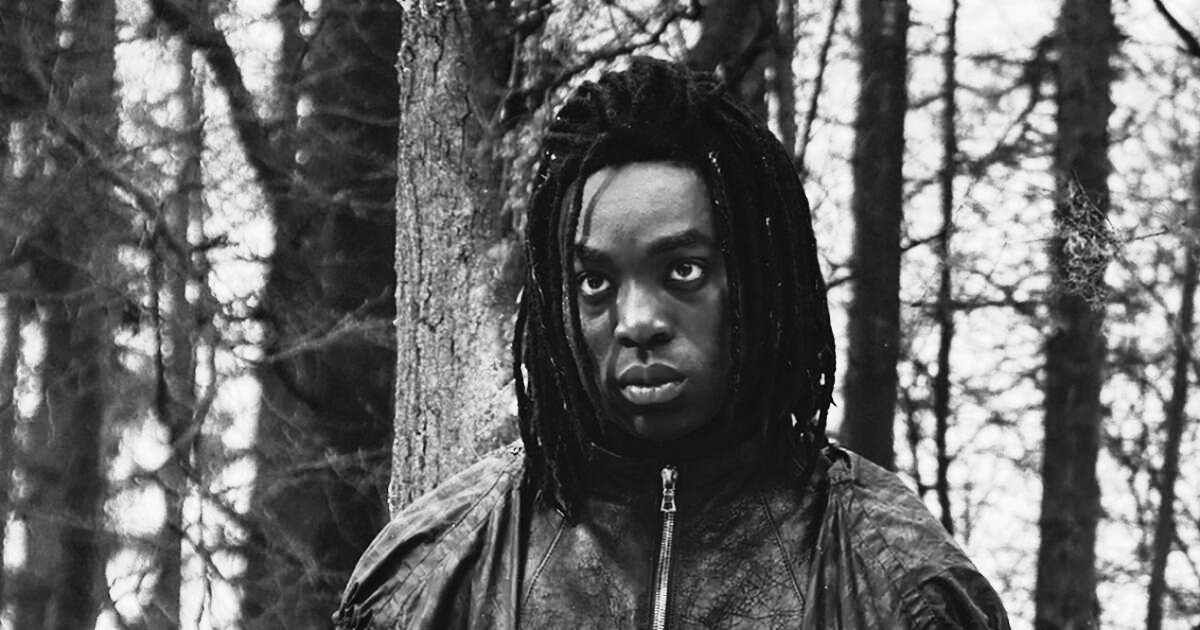
Instead, the casting director went for someone unorthodox. Enter Paapa Essiedu, the cool, suave black British actor who starred opposite Saoirse Ronan in The Outrun among other films and TV shows.
Now I’ll admit, I haven’t seen much of Essiedu on screen, but in the teaser and the trailer, to me, he looks the part. Yes, yes, don’t come at me with the “Snape Dogg” memes, believe you me you won’t be hearing Essiedu saying things like “Ma Pottah, bring me some o that sticky icky from your next Herbology class.”
Why Papa Essiedu will excel in the role
In many ways, the casting is perfect. Here’s why:
Exclusion: Snape was often seen as an “outsider” even among fellow caucasians. He was bullied for being different (I’m sure the show’s creators will find a creative way to deal with “that” flashback scene from the books involving James Potter and his crew bullying Snape) and eventually turned to the Death Eaters for acceptance. This is a struggle that Essiedu might be able to relate to after all the backlash he’s received from the casting. He’s actually Snape in real life if you think about it.
Age: In the books, Snape is around 32 years old, which is around Essiedu’s age. Rickman’s Snape brought a mature gravitas to the screen, but with Essiedu we can expect a fresher, more youthful take. He’s giving real “Half-blood Prince” vibes. It takes swag and cockiness to call yourself a “Prince” don’t you think?
He’s already played a “white” character: Yes. Paapa Essiedu played Hamlet in a 2016 Royal Shakespeare Company production. So this isn’t his first rodeo.
He has a background in theatre: Snape is very much Shakespearean in nature and as such the role requires a certain level of depth that stage actors can bring. This is where Essiedu’s theatre background will work in his favour.
He’s fucking British: No, he’s not “Snape Dogg.” He’s not an American Gangster Rapper (though he could probably play one, given how versatile and awesome he is, but that’s for another show/film). He’s a cultured, cultivated British icon that’s made a name for himself as a serious actor. Give props where it’s due.
What’s with the backlash?
Seriously, I don’t get it. A Sikh guy at my high school played Troy Bolton in a school production of High School Musical. Dev Patel played Sir Gawain. We saw Lupita Nyong’o as Helen of Troy. People, it’s not literal. These are portrayals.
If you’re struggling to get behind Paapa Essiedu as Snape, try this. Look for the characteristics, the traits. How does Essiedu bring Snape to life? What’s his take on the character? What quirks does he bring that we’ll remember in time to come?
And if you’re still not convinced, remember there was a time the internet went into meltdown when they found out Heath Ledger was cast as The Joker in Nolan’s Dark Knight. We all know how that turned out.
All I’m saying is keep an open mind and you might be surprised with how much you enjoy Essiedu as Snape. It could be exactly what we need in this AI-slop of a world anyway.
Is anything really ever black or white, good or bad, right or wrong? Or do we all live in the grey: a space where there’s good in bad, bad in good and neither bad nor good. It’s all relative anyway, right?
For our second showing at film club, we made a drastic shift from Bela Tarr’s thought-provoking Werckmeister Harmonies to the Coen Brothers’ cinematic adaptation of Cormac McCarthy’s novel No Country for Old Men, starring Javier Bardem playing a ruthless cold-blooded assassin, pre-Thanos Josh Brolin taking on the role of an “oafish” welder and peak Tommy Lee Jones reprising the role of a jaded Sheriff.
The Good, the Bad and the Ambiguous
Javier Bardem is a killer. There’s no question about it. He goes about his job with a calculated coldness. At the same time, he has many admirable qualities. He’s a man of principle. He offers victims the chance to live with a coin toss. If the victim wins the coin toss, he keeps his word and they live. And if they lose the coin toss, he also keeps his word and they don’t live. He’s also highly meticulous, detail-oriented and precise. Granted he shouldn’t be killing anyone in the first place, but as far as his work goes, you could say he’s actually pretty good at it.
Josh Brolin shouldn’t be involved in any way. But after he stumbles upon a car packed with cash and coke, he’s as good as dead. Without trying to oversimplify things, Josh Brolin is the “good guy” in the film. Meaning he’s the one being hunted and has no intention of killing or hurting anybody. But unlike the killer, Josh Brolin’s character has no principles. He’s married, but still eyeballs other women. He’s also sloppy, leaving a trail wherever he goes and can oftentimes be frustrating to watch because of this sloppiness. A “good” guy that’s not very admirable.
And then you’ve got Tommy Lee Jones playing the jaded, soon-to-be-retired Sheriff. As far as Sheriff’s go… he just gives up. He recognises that he can’t keep up with this “new kind” of killer and resigns to the fact that his numbers are up and it’s time to step out of the arena.
A bad guy with principles. A good guy without principles. And a Sheriff who’s just given up. If this isn’t moral ambiguity, I don’t know what is.
Is intent the line between good and evil?
In the great ancient Indian Epic, the Mahabharata, there are two key figures; Krishna fighting for “good” and Shakuni fighting for “evil.” On the surface, their MO’s are pretty identical. Both use psychological warfare to gain advantage. Both play a zero-sum game and both use deception to further their side’s cause.
In fact, when it comes to it, Krishna is the very personification of moral ambiguity, breaking all the conventional rules of warfare, instructing Arjuna to strike down an unarmed Karna, deliberately manipulating a lie to defeat Drona and even using a human shield against Bhisma. Yet, he has been deified across several prominent cultures, raised to the level of a God, his name chanted the world over.
So what’s the difference between Krishna and Shakuni?
Whereas Shakuni was Machiavellian in pursuit of a petty vengeance against the Pandavas, Krishna used these methods to serve a higher Cosmic order, with no individual accolade or reward presented to him for his efforts.
This begs the question: does the end justify the means? Was Krishna right to break the rules? What about our killer in No Country for Old Men? Principled as he was, what motif was he serving other than his own Ego? And even if it was some Greater Good, is his killing in any way justified?
There is another Hindu principle: Dharma, doing one’s duty without attachment to the outcome. If the killer viewed it as his duty to kill as part of his job, does this justify the deaths of the ones who stood in his way?
Life is complicated
As a society, we’ve gotten into the habit of putting things into the “good” vs “bad” box, without considering the grey areas. Take the scene from The Morning Show on Apple TV, where a man has been incriminated for sexual misconduct and a group of female employees, none of whom were his victims, are passionately calling for his “balls to be chopped off.” That’s when one of the main characters, Mia, steps in and says:
First of all, how old are you? 24? Actually why don’t you try giving it 20 years (to see if you still want them to cut his balls off) and with all due respect, you’ve been at your job 18 months, what the fuck do you know about this show, what it’s been, what I’ve seen, what I’ve gone through since I’ve been on this show […] it’s not as black and white as you are stating it. This shit is complicated. People are complicated. Mitch (the one incriminated played brilliantly by Steve Carrell) was complicated. And he was a part of this show. And I care deeply for this show.
It brings to mind another scene from Do the Right Thing, which we saw during film club, which you can read more about here. In short, Sal has a pizzeria that becomes the centre of controversy after he refuses to have any famous black people on the restaurant’s “wall of fame” not out of spite, but simply out of choice. Sal doesn’t see black and white. He sees customers. Yet he’s wrongfully incriminated by a society hellbent on creating division and chaos, when all people should really be doing is enjoying the fucking pizza.
As for No Country for Old Men, I’ll leave it to you to decide what was right and wrong, who was good and bad. But if you’re able to stay in the grey, you’d have reached equanimity before GTA VI (can we still use that reference?).
This was the first in a series of seven Art House Films with my good friend Bill Crandall. It was also – along with The Secret of Kells the one that had the biggest impact on me.
It was my introduction to Bela Tarr – master of the long shot – and it was definitely a red pill/blue pill moment. Take the red pill if you want to beat brain rot and see the world for what it is through a series of carefully curated films. Take the blue pill if you want to remain in the comfort zone of rehashed Romantic Comedies and doom scrolling.
I definitely took the red pill. And boy was I glad.
Side note: if you don’t know what I’m talking about with red pill and blue pill, you need to watch The Matrix.
What’s it about
Much like most of Tarr’s work, this takes place in some rural setting in Hungary. It’s a quiet town with a town square and residents milling about, going through the motions without a sense of purpose, waiting for the arrival of a “circus” comprised of a giant stuffed whale and a false prophet that we never actually see.
On cue, the residents descend into anarchy, destroying a hospital before the most pitiable scene stops the chaos and they all go back to their purposeless lives.
Open your eyes
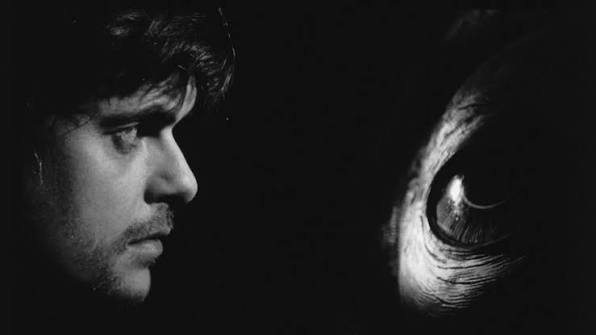
Our main character Jànos, played by Lars Rudolph, is easily distinguishable by his intellect and deep, penetrative gaze. His eyes literally do most of the talking throughout the film. You see curiosity peak at wonder and then descent into disbelief, horror and – ultimately – total despondency as the film unfolds.
Curiosity as he explains how the solar system works
Looking the miracle in the eye with a sense of wonder
Disbelief that they can’t see it, when it’s right in front of them
Shock and horror at what unfolds
Total despondency as he’s institutionalised
We see the world through Jànos’ eyes. He – like the rest of the residents – is intrigued by the circus’ arrival. But unlike the rest of the residents, he’s more captivated by the giant stuffed whale than this so-called prophet who will supposedly perform some kind of miracle.
He claims that the whale is the true miracle. And he’s most certainly right.
A creature of such magnificence
World, can’t you see?
The miracle you’ve all been waiting for
Is right in front of thee.
Inspired by Jànos
This reminds me of a little anecdote from my own life.
Growing up in a staunch Hindu household, I was surrounded by people constantly looking for miracles in the sky. And every now and again, a so-called “prophet” would come into town and charge a lucrative amount to perform some kind of miracle.
Once, I accompanied my Mum to see one of these prophets. There must have been a thousand people stuffed in the community auditorium where the event took place!
Our rockstar prophet took to the stage. He wasn’t much to look at: scrawny, bald, long beard. But when he raised his hands, the entire auditorium went silent.
It turned out this man had an active “third eye” and could see into your future. I watched as he invited the ones with VIP passes to read their fate. It was all the usual bollocks: “yes, yes I see great fortune in your future” (man gambled his family fortune away and now lives on the dole in the UK). “Ah, a great romance awaits you” (divorced twice, lives alone in a small town).
At some point, I noticed a group of ants moving a bread crumb along on the floor. I stopped listening and just watched this incredible display of teamwork. And even though I was too young then to really grasp what was happening, looking back, I must have been like Jànos in that moment.
Here was a real life miracle happening right in front of my very eyes. A group of tiny creatures somehow being so coordinated as they move that piece of bread from one place to another. Instead, everybody is so focused on watching this “prophet” (wrongly) predict people’s futures.
My Mum noticed me not paying attention and elbowed me hard in the ribs. Back to the “prophet” it was.
The truth is, miracles happen right in front of us every single day. They might not be huge or biblical in any way. But they are still reminders that life is beautiful, that if we open our eyes and just take a look around instead of waiting for some great, big cosmic gesture, we might actually see something real.
To me, that was the essence of the film. Only one man could really see things for what they were. It seems to be a recurring theme in Tarr’s body of work.
Take Satantango for instance. A small farming commune waiting for a Messiah to lead them to the promise land, when their own lives are falling apart right in front of their eyes.
Most people are still waiting on that one miracle to bail them out, when the true miracle is in the day to day, how you live your life, whether you choose to open your eyes, or keep them closed.
Awakening
Watching Werckmeister Harmonies sparked something in me. Previously, when I had to go pick my son up from school, I’d rush out of the house, zoom down to campus, get him and zoom back. It was perfunctory, without a sense of purpose or even appreciation.
After the film, I consciously decided to slow things down. Literally and metaphorically. After getting my son, I took a longer, albeit more scenic route back home. I took it down from 70 plus to 40, put on the soundtrack (there are two) from Werckmeister Harmonies, and actually took a moment to see.
And that’s when I realised there’s so much we take for granted every single day. The two gardeners sharing a mandazi, donut, having tea in chipped mugs and laughing as they lounged on a grassy bank in the Sun. A lady, probably in her seventies, heaving a large basket of provisions to sell as she made her way slowly up the road. A family of monkeys going across the road, overhead on a wire, the baby hanging upside down, clinging on to its mother’s belly.
By the time I got home, I felt so enriched, so fulfilled, it was as though I’d taken my first breath in a long, long time.
Cinematic bliss
The themes and narrative aside, Tarr’s filmmaking prowess lies in the quality of the shot. Each frame feels like a moving black and white photograph and he uses chiaroscuro to really bring out the meaningful elements in every frame.
It was also the first time that I actually lived in the film. For example when Jànos and the pianist are walking down a road. And they’re just walking and walking and you’re walking with them for four and a half minutes of screen time. Another feature of Bela Tarr’s filmmaking. He lets scenes breathe and as a result, you actually get to breathe as well.
All in all, Werckmeister Harmonies is more relevant today than ever before. It takes one nudge to storm the Capitol or to unleash racist abuse on the internet targeted at black footballers.
And when people don’t see, they look to the sky (or their screens) hoping to find an answer, when the answer they’re looking for is actually right in front of them.
The first time I consciously became aware of John Carney’s films was in 2016 with his indie hit Sing Street. And then I realised I’d already experienced another of his hits three years prior; Begin Again starring Mark Ruffalo and Keira Knightly. More recently I caught Flora and Son on Apple TV.
There seems to be a recurring theme across all his films: even in the darkest of times, when all hope seems to be lost, from the pits of despair, art can well and truly save the world.
Warning: if you haven’t seen any of these films, this post may contain spoilers.
Just fucking do it
The last line in Flora and Son literally is “you’re fuckin’ shite” in reference to Flora’s (played by Bono’s daughter, Eve Hewson) open mic performance. And on some level, she probably already knew that it was going to be shite.
But that didn’t stop her. Teaming up with her talented producer son, she put together a banger that may just have been a little ahead of its time. But it wasn’t the song that had an impact. It was the timing.
Flora, just like Conor Lawlor in Sing Street, has nothing to live for. She has a crappy relationship with her son, separated from her husband and has to wipe bums (literally) as a child minder for a living.
Similarly, Conor has been demoted to public school, doesn’t own a pair of black shoes, his parents are getting divorced and, to top it all, he gets on the wrong side of the class bully.
Both films have two things in common: 1) Jack Reynor and 2) the “victims” turn to art (music) as a way out of their miserable state of affairs.
And that’s exactly what’s needed now more than ever.
How art can save lives
I want to add Greta from Begin Again, played by Keira Knightly, into the mix. Overshadowed by her sexy rockstar boyfriend (I see you Adam Levine), Greta decides to take matters into her own hands and, with the help of a burned-out record executive, Dan (pre-hulk Mark Ruffalo), she finds her voice, her confidence and grit to step out of her ex-boyfriend’s shadow. Only thing missing in Begin Again is Jack Reynor.
The three instances I’ve highlighted are a reflection of what happens every single day. Somewhere, somehow, there’s a person sitting on the next great American novel, a killer musical composition or even a screenplay waiting to be green lit by Hollywood’s finest.
But most people don’t… act. They sit in fear of being judged and allow the passages of time to wash their creativity away, until one day they wake up on their death beds and realise their entire life has been pointless.
So if you have a gift, whether that’s painting, writing, music or something else, wake up. Wake the fuck up.
The world needs you and your art. And it needs it now.
I once aspired to be a novelist. In my twenties, I actually spent one summer writing day and night and came up with a couple of half-decent manuscripts.
A few years after that I took a sabbatical to focus on two more novels, both of which I managed to complete and circulate to literary agents for representation.
And then COVID hit, the publishing industry was turned upside down and I didn’t hear back from any of the agents who had requested my manuscripts.
I lost hope. I turned to other endeavours as a way out (mainly becoming a copywriting hack) and told myself that it’s okay. That the world didn’t need me or my art. That I would do just fine without it.
And then a few weeks back I met Bill Crandall at a party. We started talking about films and by the end of the night, agreed to meet up once a week for a showing at his house. There’s a separate post dedicated to this experience here.
What I wanted to say was that through a series of art house films – and Bill’s encouragement – my wobbling hand finally picked the pen up again. I started this blog, blew the dust off my shelved novels and just started flexing my previously atrophied creative muscles again. And let me tell you: it feels fucking good.
It doesn’t matter if it’s “good” or not
Coming back to that last line in Flora and Son, (“you’re fuckin’ shite”) one thing I’ve learned is that it doesn’t matter what somebody else thinks about your art. If you enjoy doing it, like really enjoy, everything else will fall into place.
Another scene that perfectly captures this sentiment is in Sing Street when Conor stands up to the bully and says, “you only have the power to stop things, but not to create” and that shit hits hard.
Destructive forces are at hand. We have “AI creators” now and Elon Musk thinks Grok can make a better version of Nolan’s Odyssey (as if). It’s up to us now to take a stand.
Let John Carney’s characters do the talking
For when you fear being mocked:
“Rock and roll is a risk. You risk being ridiculed” – Brendan to his brother, Conor
For when you think you need to know how to do everything 100% right:
“Did the Sex Pistols know how to play? You don’t need to know how to play. Who are you, Steely Dan? You need to learn how NOT to play, Conor. That’s the trick. That’s rock and roll. And THAT… takes practice.” Brendan again.
If you feel like life is “meh”:
“One of the most banal scenes is suddenly invested with so much meaning! All these banalities – They’re suddenly turned into these… these beautiful, effervescent pearls. From Music.” – Dan (Mark Ruffalo) in Begin Again
And then this exchange between Dan and Greta in Begin Again perfectly captures the quintessence of John Carney and how art can change lives:
Dave: But we’re just gonna have to find a way to get through this, get through this together.
Greta: When did you, like, when did you realize that?
Dave: When you sang to me on my voice mail. I realized that nobody on Earth in their right mind would ever do anything remotely like that, and… that killed me. That crushed me. You… completely won me over.
Greta: You know, I wasn’t actually trying to win you over. I was trying to tell you to fuck off.
Bottom line
Here it is: tune up that guitar, fill up that pen, dust off that typewriter, and then – immerse. Immerse. Immerse. If not for you then for the world.
This film has become more divisive than it needs to be. You’ve got the “I hate it” camp. The “greatest film of all time” camp. And the “meh” camp. I definitely didn’t hate it. I didn’t find it “meh” at all.
As for “greatest film of all time?” that changes pretty much week on week for me.
What’s it about
If you aren’t familiar with Homer’s 7th century allegorical poem of epic proportions, then good. At least you won’t be one of those people bemoaning the lack of historical accuracy in Nolan’s adaptation.
In short: it’s been ten years since the fall of Troy and Ithaca’s King and great hero, Odysseus, hasn’t returned.
Ashamed by the carnage he witnessed and wallowing in his own guilt, Odysseus delays his return, a decision that tests his mental, physical and spiritual strength, before finally washing up on Ithaca’s shores in rags to save his Kingdom from a group of cunning “suitors” waiting to pounce on his absence and snatch it from under his son and heir, Telemachus.
That just about summarises it anyway.
Nolan’s masterpiece
Apparently, Christopher Nolan was supposed to direct Troy some twenty years ago. But then Wolfgang Peterson, who developed the film, didn’t get his Batman V Superman movie green lit and so asked for Troy back.
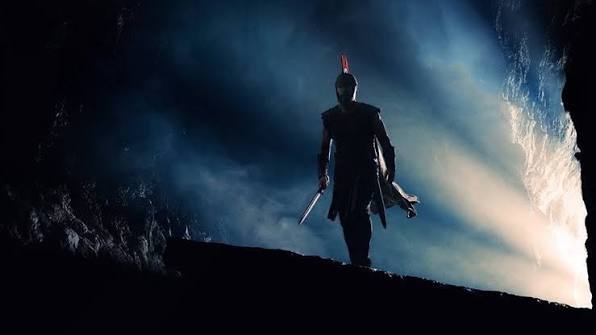
Twenty years later, Nolan finally has his own Greek epic. And it. Is. Gorgeous.
Seriously who gives a shit about historical accuracy, when you’ve got shots like these (and more) that will leave you drooling?
Here’s what I loved about the film:
The cinematography is world class
The acting is world class
Ludwig Göransson’s score is world class
Nolan’s direction is world class
This on IMAX is world class
The storytelling is world class
Why it spoke to me
If you’ve seen any of my film club “reviews” you’ll know that I’m always looking for a story that resonates, regardless of the media.
The Odyssey was no exception.
Now I haven’t read the book (yet), but I did connect with Nolan’s world building and narrative.
Odysseus is all of us going through the motions in life. Just when we think we’ve done the right and dutiful thing in figuring out how to penetrate an impenetrable fortress, we quickly realise that that may not always be a good thing.
We tear down walls and watch as people descend to the level of beasts in their pursuit of lust and power, while we look on in despair, knowing that this was all our doing.
I remember once, at work, being asked by my boss to do something that would result in somebody else losing their job and being torn between having to do my duty and doing the right thing.
In the end, I couldn’t go through with the request and ended up walking away, which means I don’t see the ghost of a jobless colleague every day at 3AM.
And then, when trapped in a cave with a giant cyclops, just when we’ve figured out a way to escape and save lives, we decide to give our Ego a boost and take the beast down. It backfires, more lives are lost and we barely make it to safety.
It reminds me of a time when I participated in a pub quiz. We were top of the leaderboard and had the chance to double our points at the end. Double or nothing. You’d think finishing first would be enough, but we made the collective decision to keep playing and ended up losing all our points – and the title – to another team. Ouch.
Odysseus’ journey is transformative. In every conundrum, he has a decision to make as the leader of his men. And every decision has its own set of consequences. Do we continue out into sea and lose all men to a giant whirlpool? Or do we veer off course, brave another monster, but lose fewer men?
Can we overcome lust, gluttony, temptation and guilt to finally get to where we’d set out to in the first place?
Life itself is an Odyssey. It’s not always straight-forward. We may pick a course from A to B, but, often, we’ll meet unexpected challenges and obstacles that will test our resolve and throw us off course. And only when we go through these challenges, will we emerge on the other side as our best selves.
Is mainstream media influencing people’s perceptions?
I was out with a group of friends and one of them was talking about their experience with The Odyssey. According to them:
I can’t stand Tom Holland
Why is Helen of Troy black?
It was too long (see my post on phones and attention span)
It was historically inaccurate
Something about Anne Hathaway’s forehead
What’s up with the diverse cast
Why are none of them actually Greek
I’m sure there was more, but by this point I’d completely switched off. I’d read all this in a “critic’s” review of the film already. She’d regurgitated it almost word for word and when she was done, I asked her one simple question: “is that what you really thought of it?”
She looked at me, bemused, and said, “I mean, yes, like why do they cast…” snore.
Look, let me be honest with you. If you want to watch the film, go out and watch it. Form your own opinion. Look past the casting and the historical inaccuracy and embrace it for what it is.
It’s a Nolan film. It’s epic. It’s beautiful. The actors transform into the characters they play. In fact, I wrote a short verse about it:
This man they once called Bourne
He now dons the helmet of Odysseus
His taut frame sits in its armour
He strings bows like in the days of ardour
His wife, the beautiful and majestic Queen
His son, discovering his heritage still
Though in another world she dresses in prada
And he swings on a web from building to building
As for Eurylochus, we’ve seen him strum a guitar
And make people laugh
All this in another life
In this life, he serves as Odysseus’s right hand
The strings detach
The stage is gone
All that’s left is the fate of Ithaca
And the one hero that can bring her back to glory
No cameras. No rigging. No crew. No cast.
No lens to capture the fate of the ancient world.
Just a man who wants to get home, no matter what.
And that is the true Odyssey.
Yes there are other adaptations, each with its own merit. I haven’t seen the other ones (yet), but on its own, as a cinematic set piece, I can’t imagine a better version tailored for the big screen. The cyclops scene alone is worth making the trek to an IMAX theatre.
For me:
⭐⭐⭐⭐⭐
Rating: 5 out of 5.
If you’d like to share your thoughts on the film, actual or otherwise, please do so in the comments. I’d love to hear what you (actually) think.
I’ve been thinking about how to write this post for a long time now. But what the heck, maybe I’ll just write and see where it goes.
My biggest problem, I think, is that I second guess myself too much. Will this be “academic” enough? Will it sound “intelligent” enough?
But this is a blog dammit, so who cares, these are my thoughts and I just want to put them down somewhere. So here goes.
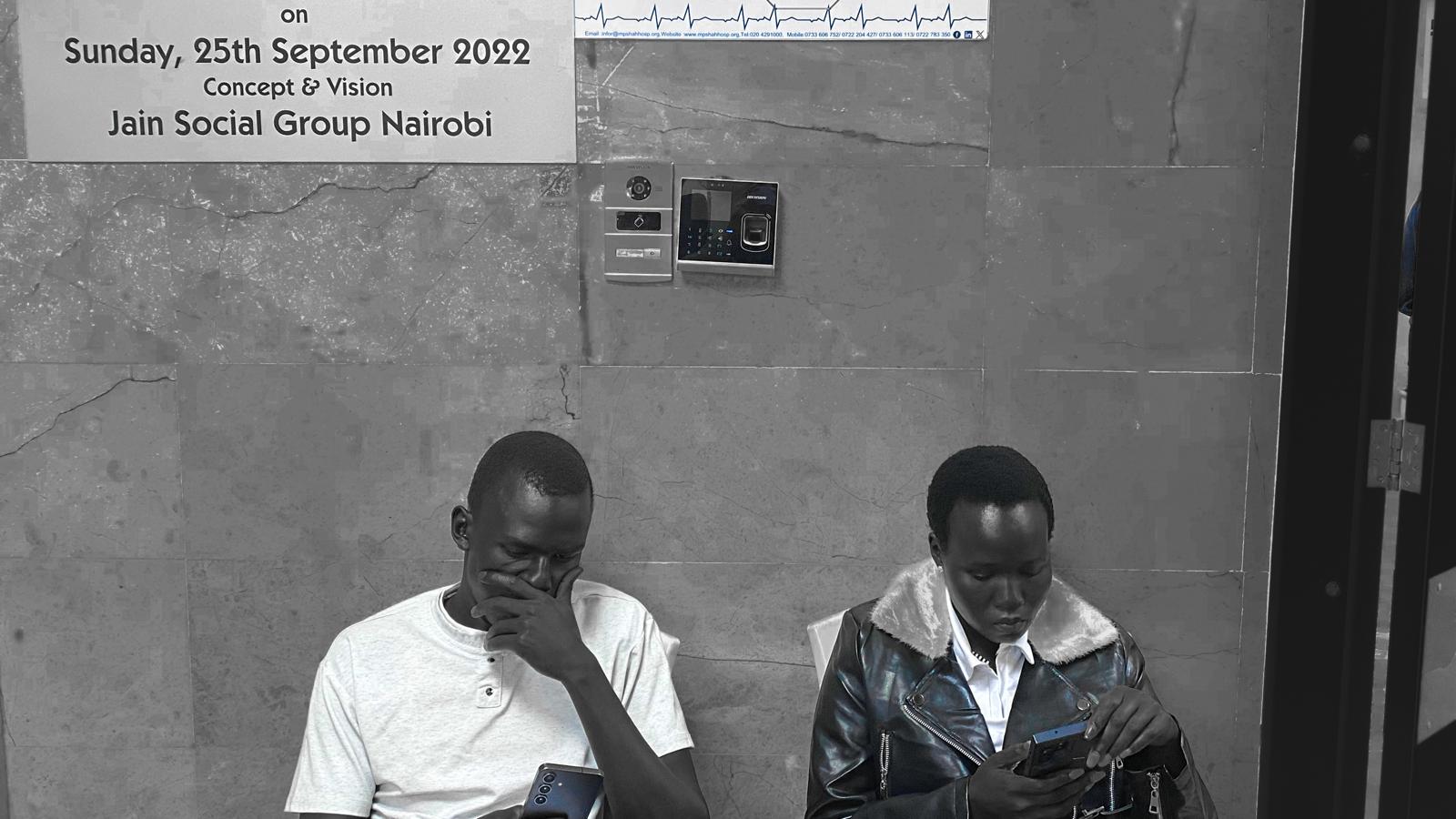
I was at the hospital the other day and decided to run a wee experiment. I wanted to see a) how many people were on their phone at any given point and b) how long people could go for without getting their phone out.
There were 36 people in the waiting room for the hour and a half that I was there. 3 left and 3 came in, so the number remained 36 throughout. And these are my findings:
At one point or another, all 36 people made use of a cell phone
The longest a person lasted without using their cell phone was 20 minutes
I don’t think you can draw any serious conclusions from this. But it did get me thinking: have we become obsessed with our screens as a society?
My personal struggle with screen time
I can’t speak for the whole world. But I can speak from my own experience. I got my first cell phone when I was 13. My parents gifted me a Nokia 3310. It had a black and white screen, you could compose ringtones and play Snake.
Even without Instagram and other apps, I’d spend a lot of time on the phone, as did most of my peer group. I blame Snake for that.
Fast forward to today. We’re spoiled for choice. Apps, a new iPhone release every week (kidding, not kidding), 10000 mega pixel cameras (front and back) and easier access to phone data thanks to “bundles” and “deals” from sim providers.
Literally, anything can be done on a phone. Who needs the real world right? Want to connect with people, there’s WhatsApp. Want to compare lives? There’s Instagram. Want to get “influenced” by the latest trends, there’s YouTube (and YouTube Shorts). There’s Threads. Snapchat. Tik Tok. Viber. The list goes on and on and on. Again, who needs the real world?
I know I’m guilty of always having my phone on my person. If I sit still for a few minutes, I start to feel the itch. And when I feel the itch, I get my phone out. And here’s my usual app route:
WhatsApp: who’s messaged, have I replied to everyone that’s sent me a message? Ooo, updates, who’s got things to share. Time: 3 to 5 minutes
Instagram: let’s see what people are up to. Generic story 1. Generic story 2. Oh look, so and so went to Bali. Didn’t someone else post the same exact picture? Time: 8 to 10 minutes
BBC Football: has anything changed in the last 1 hour since I last checked? Time: 4 to 6 minutes
YouTube: shorts. Recently, Lionel Messi highlights, Beatles throwback, ancient Vedic traditions explained in an AI-generated voice, AI-generated “What-ifs” featuring Draco Malfoy. Time: 10 to 15 minutes.
Repeat after 1 hour.
The issue
I ran a quick DuckDuckGo search and found a few stats on attention span. Here’s one that coincides almost perfectly with my aforementioned experiment:
The average attention span of adults over 60 is 18 minutes, compared to 22 minutes for adults 18-30, per a 2022 study in Neurobiology of Aging
Remember I mentioned that the longest a person lasted without using a phone was 20 minutes? Hmm, looks like this is coming off pretty “academic” already!
Here’s another stat that didn’t really surprise me:
The average work-related attention span is 2 hours, a 50% decrease from 4 hours in 2000, as reported in a 2023 study by Microsoft
But is phone use and social media to blame for this? I did take an econometrics module, but I’m not going to run a regression analysis on STATA here (still have PTSD from that). I will however, pull up this stat:
The average American spends 7 hours daily on digital media (excluding social media), reducing their attention span for non-digital tasks by 22%, per a 2023 study by Nielsen
Side note: if you are an academic and feel like I’m not doing this right, just let me know. It’s been a while since I did my Masters.
From what I’ve gathered, though, is that phone use – and consequentially social media – has contributed, in one way or another, to reduced attention spans. Conclusive or otherwise.
Personal observation
We can pull up stats all day and I’m sure somebody has run a regression analysis to establish causality between phone use and reduced attention span. But I don’t want to get too academic here (ironic).
So I’ll just draw on the power of observation to embolden my statement.
Before smart phones and apps, I used to be able to sit through five days of test cricket with my father. The year was 2000, before cell phones became mainstream. That means nobody at home had one.
The match was between South Africa and India. All the greats were playing from Tendulkar to Kallis. If you don’t know who they are, use your phone to look them up (joke).
It started at 11AM. Mum brought popcorn over to us. My kid brother had his building blocks out on the floor. Dad and I sat in full concentration, only stopping at drinks breaks, lunch, tea and – finally – when the day ended. 7 hours a day for 5 days, no distractions.
Today I can’t sit through a coffee with Dad without him checking his phone every 20 minutes or so. Not because there’s anything urgent happening. Not because he has to. So I asked him why and in his words: “what are you talking about, I’m not checking my phone.” Sigh.
The antidote
I don’t know what your experience with using a phone is like. But when I spend a lot of time on mine, I end up feeling mentally – and physically – drained.
When I use my phone before bed, I sleep poorly. When I use it first thing in the morning, I find that I can’t concentrate during the day.
You don’t need a stat for this. You just need a little bit of self awareness to gauge how you feel before, during and after cell phone use.
Over the last couple of weeks, I’ve made the conscious decision to reduce screen time. Here are a few practical things that have helped with this (yes you’ve probably seen a thousand of these on YouTube and Instagram):
No phone use for the first hour of the day
Phone use restricted to “office” hours: 30 minutes mid-morning, 30 minutes in the evening
Deleted distracting apps (YouTube, Instagram)
Phone charges in another room, so it’s out of sight and out of mind
Phone has been set up to allow only certain people to call and message if they really need to get through
To help things along, I’ve also started tracking the following data:
Number of non-intentional phone pick ups: how many times do I check my phone without an intention?
Screen time
What about “raw-doggin”?
That’s not a sexual reference. That basically means doing absolutely fuck all for a specific period of time. Like when you’re on a long flight and you don’t watch or read anything. You just sit for the duration of the flight, with your thoughts and nothing else.
I’m also trying to make “raw-doggin” a part of my day to day. I’ve started with a 5 minute exercise every morning, where I just sit still and stare at a blank wall.
“5 minutes? So little?”
If you’ve read Atomic Habits like the rest of the world, you’ll understand the power of compounding tiny habits over a prolonged period of time.
My plan is to increase this by a minute every week until it pretty much becomes my entire existence. By then we’ll have iPhone 100 and I won’t be buying it.
Final thoughts
I’m not trying to say that cell phones are bad or good. Used in moderation and with the right intention, I don’t really see the harm.
But when we actually start looking up from the screen, we begin to notice the world in greater detail. Colours appear more vivid. People appear more interesting. We see movement. We see life.
And, to me at least, things are definitely more interesting off screen. So maybe it’s time to start living more intentionally. How’s that for being academic?
It’s the hottest day in Brooklyn. The sweat-drenched inhabitants of the “Bed-Stuy” neighbourhood move about in a haze, while Sam Jackson (before he became Samuel L) plays some tunes on the local-local radio station that nobody seems to be tuned into.
Pick a beat and let me lay out a fresh verse.
Hot days and nights/ I swelter/ runnin from the fuzz/ helter skelter/ two hundred degrees don’t need no sweater/ blast Fight the Power on my sound dispenser.
Grab a slice at Sal’s/ I see walls/ wait a minute/ where’s magic Marley Marl?/ Fuck Sal/ Fuck up his joint/ Wait stop! What bout ma pizza? Man fuck yo pizza, this man don’t ‘preciate none of us brothers.
So what we gonna do?Boycott? Violence? What’s the right thing?
Left fist hate/ Right fist love/ Fight the Power/ A sign from above.
Call on X, call on Martin, one of these brothers/ They Do the Right Thing.
Does anyone do the right thing?
Let’s analyse.
Sal, owner of Sal’s Pizzeria, refuses to put up pictures of black men on his wall, despite majority of his customers being black. Is he doing the right thing?
Young Giancarlo Esposito wants to boycott the pizzeria because of this. Is he doing the right thing?
Radio Rakim wants to play his music inside Sal’s, despite being told not to. Is he doing the right thing?
The local old drunk saves a boy’s life. But he still gets shit for it. Did he do the right thing?
Three black men are bitter because a Korean family that only just came into town already have a thriving business. Is that the right thing?
Spike Lee, who works for Sal, takes the additional $250 thrown at him towards the end of the film, even though he didn’t earn it. Did he do the right thing?
My two cents
The truth is, nobody does the right thing. Nobody does the wrong thing. Right. Wrong. These are two bookends on either side of a whole lotta grey matter. And it’s that grey matter that actually… matters.
In fact, if you ask me, Sal sits perfectly at the intersection of these two extremes. He is equanimity personified (except for his final outburst).
He doesn’t really see black and white. He just sees customers. And his only job is to take care of these customers so they can keep coming back.
And he says so himself:
I never had no trouble with these people. I sat in this window. I watched these little kids get old. And I seen the old people get older. Yeah, sure, some of them don’t like us, but most of them do. I mean, for Christ’s sake, Pino, they grew up on my food. On my food. And I’m very proud of that.
So… do you think anybody actually does the right thing? I’d love to hear your thoughts! All said and done, this was a masterclass production by the one and only Spike Lee.
Imagine for a second living next door to a vampire. Let me say that again. Imagine that your next door neighbour is, yes, a vampire. And somehow… you knew?
Not just that. They appear “attractive” to you. They appear to be the same age. They don’t appear to be scary at all. And yet, at full moon, when blood lust is at its peak, they need to feed.
Now imagine all this taking place in a suburban neighbourhood in Sweden.
What I’ve just described to you is the plot of just about any vampire story. Boy meets girl, or girl meets boy. Boy/girl turns out to be a vampire. Will they. Won’t they. Can they.
More than just a “vampire” film
Tomas Alfredson’s eerie retelling of an age old story isn’t your typical “falling in love with a vampire” teenage drama. It’s so much more than that.
To begin with, Alfredson has done away with all the usual cliches. The fangs. The jump scares. The cheesy drama.
The fearful aspect of the film actually kind of creeps up on you in the most unexpected way. So much so, you don’t actually think about it until after you’ve seen the film.
Packed with moral ambiguity – a running theme throughout film club – it provoked quite a few existential questions.
Questions like: who really are the monsters? Take your pick: the negligent parents who don’t really know what their kids are up to behind closed doors. The aloof teachers who just stand by and let horrors aplenty unfold without consequence. The estranged, alcoholic father who’s all but given up on his family. Or – probably the most obvious one – the school bullies who go out of their way to make the misunderstood kids feel uncomfortable.
Note that in my list I haven’t mentioned vampires. Not once.
And that’s because, to me at least, poor Eli isn’t a monster at all. They are a victim of a great atrocity (there’s no real backstory in the film, but there’s a book for that) committed centuries prior. And they’re living with those consequences, doing whatever they can to survive. This is captured perfectly in this exchange between Eli and Oskar:
Oskar: I don’t kill people
Eli: No, but you’d like to. If you could… to get revenge, right?
Oskar: Yes.
Eli: Oskar, I do it because I have to. Be me, for a while.
Eli’s moral ambiguity
I’ve established that Eli isn’t inherently bad. They kill because they have no choice. If they don’t get blood, they can’t survive. But does that mean Eli’s… good?
Who’s to say. There are a couple of instances where Eli does kill. And it’s not to feed. I won’t say much more about this as those scenes (and the film) are worth watching, but it does beg the question: has Eli bent their rules before? Or are they doing it just for Oskar?
One thing’s for certain. The divide between good and evil is blurred. And I think I can capture it in a short verse inspired by the film:
Twelve in all perpetuity,
Thirteen I’d never been,
Yet all the world’s atrocities
With these eyes, I have seen
Unseen have I remained
Though strange I may seem
Only those stranger still
Will pay me any heed.
Centuries I have roamed this world
Centuries more I expect to roam
And though you may be twelve
And perhaps someday thirteen
I’ll keep you by my side
Until you perish, my sweet.
One last thing. If your neighbour turns out to be a vampire, give them the benefit of the doubt. They’re not the monster you should be afraid of.
We live in a world of insta-gratification. Don’t believe me? Here’s a statistic to prove it:
While the average person in the UK spends around 4 and a half hours per day watching TV and video content, the average time spent per video is 2 to 3 minutes. This reduces to mere seconds on “YouTube Shorts.”
Combine this with the fact that only 20 per cent of film school students in the United States could sit through an entire movie at home and you have your answer.
And there’s no shortage of content either. On average, 16,000 videos are uploaded every minute on TikTok, while Netflix added 39 films and TV shows just in August 2026.
This means if the emotional pay off doesn’t take place within the first few seconds, or minutes, it’s usually scrolled, skipped or ignored entirely.
An act of defiance
And so, as one would on a typical Monday at 2:40 AM, I undertook the mammoth task of watching Bela Tarr’s magnum opus, Satantango in one sitting.
Call it an act of defiance. Or maybe “insanity” is the word you’re looking for. Whatever it is, I knew I had to do it for the sake of what good’s left in this over-stimulated world.
And boy, I sure didn’t regret it.
Satantango: what’s it about
The plot centres on a farming commune in rural Poland at the fall of communism. Man has descended to the level of beast (symbolised by the opening scene with cows milling about), succumbing to his baser instincts.
There’s filth, vice, debauchery, culminating in a suicide and the timely arrival of a mysterious figure with Messianic qualities, the great and cunning Irimais (played by Mihaly Vig), whom they believe will take them out of the dump and restore glory to all.
Satantango: my experience
If you aren’t familiar with Bela Tarr’s work, he is the master of the long shot. The average length of a single shot in this film is around 4 and a half minutes. This makes it around 150 shots across 12 chapters.
Perspective: this very shot lasted about 6 minutes. Neither character spoke a word. There’s some movement, but not a whole lot. Neither of them have phones or anything to distract them with. They’re just waiting. Patiently. Calmly.
Put it this way; there’s an extended pub scene where the viewer looks on as people dance to the monotonous, repetitive tune of a harmonium for 12 minutes. You might as well be at the pub yourself, perched on a bar stool with a cigarette, taking it all in.
I guess that’s what Tarr intends. About two and a half hours in, it ceases to be a film and becomes part of your very existence. You actually end up bonding with the characters, spending time with them in each and every lingering frame.
As for the emotional pay off? You’re sitting through 7 and a half hours of mundane, albeit scenic, run time for a mere 30 minutes of Irimais’ charisma, including a powerful 12 minute monologue. And boy is it worth it.
Bela Tarr’s warning
In both Satantango and Werckmeister Harmonies, as well as his other films I’m sure, Bela Tarr hints at the collapse of civilisation as we fail to rise above our animalistic desires and embrace a higher level of consciousness.
In the words of Irimais:
“They are slaves who lost their master, but they can’t live without pride, dignity and courage. Yet they don’t feel such qualities reside within them. They only know how to live in the shadow of such things. They follow that shadow like lemmings off a cliff. They can’t live without their fantasies. But when they get too close they can’t handle it.”
I won’t spoil the true motif behind Irimais’s actions, but I will leave you with this one passage from the film that summarises Tarr’s warning:
“Drawn out by the tender sound of the accordion, the spiders in the pub launched their last attack. They sewed loose webs on top of the glasses, the cups, the ashtrays, around the legs of the tables and chairs.
Then, they bound them together with secret threads so that in their hidden corners they’d notice every little stir and more until this almost invisible web would not be damaged.
They sewed a web on the sleeper’s faces, their feet, their hands. Then hurried back to their hiding places, waiting for an ethereal thread to move, to start it all again.”
Relevant to today
Are we also slaves without a master, living in the shadow of pride, dignity and courage? Well, if we are not able to sit through a film without checking our phones. If we’re walking out of great cinematic epics like Nolan’s The Odyssey because our attention spans cannot take it. If we’re chasing fantasies and then getting put out by them. Then perhaps, yes, we, too, are slaves without a master.
It was for this exact reason that I watched Satantango. Earlier I said it was an act of defiance. I want to slightly amend that to: it was an act of necessary defiance. It was my way of standing up to scroll-culture. To mediocre “films” that flit from shot to shot every few seconds. To artificially generated “art” that has no soul. To generic images patched together haphazardly with no meaning.
So go and watch Satantango. No, go and live Satantango. For yours and all our sakes.
Here’s a wee bit of verse to send you on your way, from yours truly:
Set in a bleak post-war Poland in 1962, the story follows a young girl, Anna (nee Ida), who joins a convent after she’s orphaned.
Just as she’s about to take her vows, her Jewish heritage comes to light and she’s sent to her only known relative; a Devil-may-care aunt.
Keen to find out what happened to her parents, Ida and her aunt set off on a road trip. And so begins a great Odyssey through pain masqueraded as nonchalance, with themes of suffering, resistance and anti-Semitic sentiment raising the roof of this stunning piece de resistance.
Aunt Wanda steals the show
Ida, for her part, was fantastically portrayed by Agata Trzebuchowska, who was apparently discovered at a cafeteria in Poland.
But for me, it was all about Aunt Wanda. I was wholly captivated by this woman and her on-screen display of bravado. To summarise her in a single word: gumption. She could make blokey Polish blokes cripple before her. And she was antithetical to the convent and everything Ida believed a woman should be.
Bold. Daring. Free.
In her words “Jesus loved people like me” with a tongue-in-cheek reference to the controversial figure of Mary Magdalene.
But as the film wears on, and certain hidden truths are exposed, dents appear in that steely facade. And when the mask finally falls off towards act three, we see a broken woman who had never really come to terms with the tragic death of her son and her sister, having thrown herself into vice and work.
In the end, she could avoid it no longer. She had to look it right in the eye, even though it cost her her life.
Ida’s choice; the moment everything came together
When Ida refused to take her vows, it seemed as though she’d escaped being confined in a cage for the rest of her life under the watchful glare of Mother Superior.
She decides to follow in her aunt’s footsteps, partaking in every vice she’d been exposed to (including Cole Porter), before the moment of truth.
In bed with her lover, Ida asks what’s next. The young man – a jazz musician they happened to pick up along the way – tells Ida of his plans to marry her and have children.
To my utter shock and surprise, Ida chooses to take her vows after all, preferring the safety of the convent and Mother Superior to being chained to this jazz musician for life.
Was it the right decision?
It depends on who you ask. Back in 2008, after school, I was preparing to join a monastery. I was ready to take my vows and renounce material possessions for the life of a monk.
But then our family’s head priest turned me down. He told me that wasn’t my path. That I had to go out into the world and forge my own.
In a way, I’m glad he said that. I couldn’t imagine committing myself to a lifetime of austerity, missing out on all the little pleasures that the material world has to offer. Most importantly, my wife and son.
In the end, we must all make our choices. Some choose to brave the world, as twisted and messed up as it can be. While others prefer to hide behind the walls of a monastery or convent, turning a blind eye to all things that have no relevance in their little sanctity of (ignorant) bliss.
In true non-linear fashion, I’ll work backwards with my experiential takeaways from Art Film Club with Bill Crandall.
This was the fifth instalment and after the severe austerities presented in Oscar-winning Ida, this one really cranked up the volume in a spiral of joy and wonder.
Just as a heads-up: I’ll often take snaps straight from the television screen on my iPhone 11, so a) I don’t own the rights to any of these images and b) I’d rather use them than a perfect version off the web, because why not?
What’s it about?
n a word? Beatlemania. It’s 1964 and four Liverpuddians that go by John, Paul, George, Ringo are off to perform at an unnamed location.
Is it a day in the life of…? Kinda. Is it something more? Certainly.
A brilliant script meets authentic performances
Basically, it was the Beatles being… the Beatles. Though there was a scene in there with John Lennon that was quite hilarious. It’s a “you had to be there” sort of thing (don’t want to spoil it for you).
Now I’ve listened to a fair few Beatles songs in my lifetime. Let it Be. Hey Jude. Yellow Submarine.
Yes, they’re talented musicians. Yes, they’re fun. But this film showed me a side to the Beatles I’d never experienced before. It showed me an idiosyncratic detail that neither Hey Jude nor Yesterday could fully capture. At least not in my mind, and not without context.
Was it George’s nonchalant coolness? Paul’s wholesome sweetness? John’s edgy humour (I never even thought of him as funny before!)? Or Ringo’s slightly self-deprecating take-it-on-the-chin attitude (George: “ah, you’ve got an inferiority complex, you have” Ringo: “Yeah I know, that’s why I play the drums – it’s me active compensatory factor”)? The answer: all of the above.
And it was exactly lines like the ones mentioned in parentheses that made this one stand out for me. As an aspiring screenwriter, I was enthralled by the witty exchanges, prompted by Alun Owen’s impressive screenplay and performed admirably – and authentically – by the awesome foursome. Was it Owen’s writing? Was it just them? That will remain an open-ended question, but to me it was all just part of the magic.
Grandpa McCartney the ‘x’ factor
Tagging along with the Beatles is a mysterious “clean” old man, who’s very “clean” (repeated for emphasis as apparently actor Wilfrid Brambell was known in a previous role for being “dirty”).
As the journey wears on, we begin to question who this old man is. Paul claims it’s his grandfather, or second grandfather (laugh out loud). He’s sometimes addressed as “Mister McCartney” and other times treated as an outsider. An imposter even.
Given the surrealist bent this film has taken, it wouldn’t surprise me if he was a figment of their imagination! Whoever he was, he was HILARIOUS. Definitely the comic relief (not that it needed comic relief).
The one interesting aspect of his character is how he managed to get into Ringo’s head as we headed towards the final act. That, coupled with him trying to sell “autographed” (read forged) Beatles posters to screaming girls made me feel like maybe he’s the Devil himself.
If you’ve seen the film, I’d love to hear your thoughts on who you think he is. Bravo, mister Bramball!
The cure for depression
Sometimes life can be pretty dull. You just watch it pass you by, wondering if there’s any magic left. And this was it. It was a magical interpretation of Beatlemania in a time when people needed it most.
We think about the 60s and how difficult that must have been. But I’d like to think that these four lads from Liverpool managed to tear down the Iron Curtain with their wit, humour, talent and – above all – authenticity.
And I’ll definitely be back for more Beatles.There’s Peter Jackson’s (yes the Peter Jackson) epic 3-part “documentary” Get Back to look forward to. Now that will be 8-hours well spent!
I first met Bill Crandall at a restaurant as part of a wider gathering of friends. The first thing I remember saying to him was, “nice hat!” It was indeed, a nice hat. But that was just the beginning.
It wasn’t until our third meeting at a mutual friend’s birthday party that I actually got to know Bill.
I don’t usually do well at parties. I either withdraw completely and hide in a corner, or I overcompensate for my introvert tendencies with over-the-top bravado.
So you can imagine the relief when I found myself one-to-one with Bill over the chip and dip bowl inside the house.
We got to talking. And as Bill talked, my fascination grew. Photography, movies, art. People walked in, grabbed a chip, and walked out. But Bill and I didn’t move.
It was decided. Bill would host an art house film club at his house for six weeks starting the following Wednesday. And the rest was history.
This isn’t your average movie-going experience. This is transcendental.
Bill made one thing clear. This isn’t a party where a bunch of guys goof around while some mediocre flick plays in the background.
To be fair, Bill – and his lovely wife, Mariama – proved to be excellent hosts. A selection of beers. Pizza. Some nibbles for in-between.
But that wasn’t what I was there for.
I walked into the unknown, expecting the unexpected. And boy was I swept up in a strange, surreal Odyssey through cinematic art, with Bill as my guide.
Art can change the world
I’ll share my thoughts on each film in individual posts. But on the whole, Bill’s carefully curated selection has transformed me in ways I could never imagine.
From Bela Tarr’s Hungarian masterpiece, “Werckmeister Harmonies”, to Alun Owen’s brilliantly written “A Hard Day’s Night” featuring our favourite musical foursome, each film has peeled a different layer of cumulated social muck, slowly revealing me to myself.
(Click on the posters to see my reviews!)
My world has slowed down. I now see with my heart, not just my eyes. I’ve picked up on certain sensibilities that had evaded me for so many years.
Bill said to me yesterday that “art can change the world. Don’t believe me? Ask someone who lived through the Iron Curtain how they felt when they saw the Beatles for the first time. They gave people hope where there was none, courage when it was needed and the will to live when it had all but dissipated.”
Needless to say, my own life has changed for the better. And to think it all started with a comment about a hat. It sure was a nice hat.
Thank you, Sir Bill, for bringing me through the doorway, out of the AI-slop, generic, cookie-cutter world and into a world filled with dreams, curiosity and real, true, art.
If you want to learn more about Bill and his work, check out his blog. You won’t regret it, believe you me.