

Perfect Days: Perfection (contains spoilers)
I’ve been trying to write this “review” for three days now. Somehow I just can’t get the right words out. So I’m going to just say exactly how this movie made me feel and hope it resonates. And if it doesn’t, please accept my apologies in advance.
Wim Wender’s Perfect Days is, in many ways, the perfect film. Great acting, great script, great cinematography. It’s sublime from start to finish.
So what is it about?
The long and short: it follows the life of a toilet cleaner in modern day Tokyo, who has carefully crafted a daily routine in which he seems to find peace and solace. He gets up at the same time every day to the sound of a man sweeping outside his house. He goes through the exact same motions from grooming to collecting his every day carry items and then heading out in his van to work, always with one tape or the other in the cassette player (yes our man Hirayama is pro-analogue even though it’s 2023).
Everything changes when his niece unexpectedly drops in on him. Truths unravel, his real identity comes to light and it leaves the viewer perplexed in the best possible way. Because in this perplexity are the answers we are all seeking about our own lives.
What if we had everything we could desire: a mansion in the Hills, ten Porsches, a gold watch. Would that really make us happy? Or can happiness be found in the little details, in rituals and routines. Do any of us stop to look up at the sky? Or the trees? Can any of us even wander around without experiencing life through a cell phone? Have we become so disconnected from the essence of life that what we perceive as happiness is in fact nothing more than an illusion that will someday just fall away to unveil bitterness and agony?
I loved watching Hirayama going through his routine. I loved watching how meticulously he cleaned toilets with an unparalleled sense of duty. I loved watching him go to the park, look up at the trees and take a picture with an old school camera that could fit in his breast pocket. I loved that he preferred silence, speaking mostly in grunts and gestures. Only when the occasion called for it would he actually say something and when he did speak, it was to the point and not caked in vague ambiguity.
Could Hirayama be Dharma in practice?
In Hindu scripture, there’s this concept of Dharma: dutiful action without attachment to the fruits. It means do what you need to do without thinking about the end result. It’s a simple enough concept to grasp, but how many of us actually practice it?
Think about the two main characters of the film, Hirayama and his assistant. While Hirayama goes about his job with that sense of purpose and duty, taking great care to wipe every surface with immaculate technique, his assistant:
- shows up late every day
- asks why Hirayama is taking the job so seriously when everything will just get dirty again
- half asses his way through the job
- is only after the pay check at the end of the gig
- doesn’t even last beyond a few weeks
One is acting out of Dharma. The other out of Adharma.

What does this mean in a wider context and why should we care about it at all?
Doing something with attachment to the fruits can often come at the detriment of the process. If you’re half assing it at your job, just waiting to get paid at the end of the month, you could be flagged for underperforming. If you’re shortcutting your way to starting a business, it’ll eventually collapse.
This brings another thought to me.
I’m imagining a scenario where Hirayama isn’t a toilet cleaner, but chooses to be a developer working for a tech company. I can see him writing every line of code, from start to finish, with that same sense of purpose and duty, without worrying about the end result and especially not thinking about his pay check. He’d show up every single day, log in, and just pick up where he left off coding.
Then I’m thinking about his assistant, who would show up late, half ass his coding and then ask an AI to fix it for him.
That’s what I’m observing more and more in the world. There’s no real sense of duty or purpose. It’s all about: how can I make the most money the fastest?
I’ve seen this with members of my own family. A cousin turns up for a job interview and blatantly lies about his qualifications with a memorised ChatGPT-generated script. He gets the job, asks AI how to do it and when he’s sussed out of it, he’s already made a few thousand dollars, enough to see him through to his next job. Where’s the sense of duty?
I had coffee with my parents over the weekend. My mum brought this up, asking “why don’t you get a contract like that, it pays X amount every week, look at how your cousin’s doing it.”
And that’s when I thought of Hirayama, how he moved through the day with grace and dignity, because he knew that he was good at what he did and he did the job well. I didn’t say anything, but I did walk away smiling, knowing that whatever it is I choose to do moving forward, it will be with that same sense of duty and without attachment to the fruits. And that’s what Dharma is all about and that’s important to me.
Going back to analogue
One thing I really paid attention to was how Hirayama embraced an analogue lifestyle. He bought physical books from a dollar bookstore. He listened to cassette tapes. He took pictures on an old school camera and had the film developed every week, storing them in these containers:

I didn’t even realised he had a phone (an old school flip phone) until much later in the film when he receives his first phone call from his assistant, telling him he’s quitting.
Seeing him live like this made me realise how much time I spend on screens. I made a little promise to myself to live more mindfully, to look up at the sky more, to notice the little things. Because those are the things that make life wonderful. Perfect even.

Antithetical to his family
I want to bring back the moment when his niece shows up. What I loved about her is that she was actually willing to learn from and work with her uncle.

And then her mother – Hiryama’s sister – shows up at his house to pick her up one evening. Let me repeat that. Hirayama’s sister rocks up in a chauffeured Beamer to get her daughter. In the build up to this moment, there’s already some clues that Hiryama is estranged from his family, like when his niece tells him that her mother changes the subject every time Hirayama comes up.
And then the sister drops this one line, when talking about their ailing father who’s in a nursing home and asks him to go visit, saying “he won’t act like he used to.” That one line tells us a lot about what we’re witnessing. Although it isn’t ever explicitly said in the film, it does leave a lot to the imagination.
Like in my head, I’m seeing a tycoon of sorts with millions in the bank who wants Hirayama to take over. Maybe Hirayama does, for a while, but he’s miserable. Everything feels so staged and contrived for him. Maybe he stops actually enjoying things. Maybe his curiosity and sense of wonder stop.
So he hands in his resignation, takes his final paycheck, buys a van kitted out with toilet-cleaning gadgetry, gets a studio in another part of the City and begins his new life. You can imagine the resentment this creates between father and son, with maybe a few words exchanged in the heat of the moment and this is where that “he won’t act like he used to” makes sense.
Pain disguised as duty?

Hirayama’s life seems perfect on the surface. He has his routine, his books, his music, his friends. But there’s also an undercurrent of pain that makes one wonder: is he doing all this to escape? Is it a way of coping? Is it avoidance of the deeper, more lasting issues? Or does it simply make him happier in a way that nothing else could?
Whatever the case, my main takeaway is that joy can be found in the little rituals, the routines and just remembering to stop and look up at the sky once in a while, all while showing up and doing what you need to do dutifully. Thank you Hirayama!


Artificial Intelligence: my take
I’ve been meaning to tackle this topic for some time now. But I feel like there’s so much that’s been said about AI that we all pretty much hear different variations of the same arguments. On the one hand, you’ve got the catastrophising doomsayers who believe that AI will kill us. On the other hand, you’ve got the opportunistic new wave who believe that AI will save us. And then you’ve got those who just don’t care. Whatever camp you fall into, one thing’s for certain: AI is here and is quickly becoming a significant part of our daily repertoire.
The pros and cons of AI
I don’t want this to become an “AI is the enemy” post. For one, I don’t have the credentials to make an educated stab at anything scholarly regarding AI. Whatever I say is through pure observation and discernment. I will endeavour to keep this as neutral as possible.
What I have observed is that AI is becoming more and more of a crutch and less and less of a tool. Here’s an example from my own life. I joined my father’s insurance brokerage some six years ago. This was before AI had gone mainstream and if you needed to get something done, you had to do it yourself. My main involvement was to build his digital presence, so he could reach a wider audience online.
It took me a year of shadowing, sitting in on meetings, talking to experts, attending webinars and seminars, reading dozens of publications and books and listening to podcasts to understand the challenges around insurance regulations, adopting new technologies and offering better service to clients. Armed with all the data from my deep dive, it then took me several months to map out a staggered digital roadmap, starting with a functional service website, where I worked closely with subject matter experts to curate pages of content that I turned into digestible web tidbits and – after five years of MVPs, feedback, trial and error, a full-service e-commerce platform with built-in AI functionality.
My approach was messy, flawed and undeniably human.
Fast forward to 2026. AI has now become a daily staple and my brother has replaced me in my father’s business after I kept falling behind on my deliverables amid increasing frustration. It didn’t take him longer than a single afternoon to build a brand new website, a “claims tracking” portal and an AI chatbot that can issue policy and manage claims. All done using different AI tools from Claude to Replit.
The good and the not-so-good
I’m not here to judge. He’s got more done in the first three months of his involvement than I did in my six years combined. Kudos. Things are moving faster and with greater efficiency. I asked him how he felt about leaning so much on AI to get things done. He didn’t seem too fazed about it, adopting a sort of “if you can’t beat them, join them” attitude. Fair enough.
But is it really about “beating” AI? Not really. Again, it’s all about your worldview, or Weltanschauung, and how it aligns with your personal stance on AI.
Personally, I love this story about Charles Darwin that I came across in Robert Greene’s Mastery. In his youth, Darwin was a distracted, scattered mess of an adolescent. He wasn’t good at school, couldn’t focus and preferred spending time outdoors than in the classroom. All this changed when he was invited to join an expedition in Latin America aboard the HMS Beagle as an unpaid intern.
After seven years of acute observation of the natural environment, Darwin returned home and upon his return, his father commented on how Charles had changed:
His head seemed larger. His whole manner was different – a seriousness of purpose and sharpness could be read in his eyes, almost the opposite look of the lost young man who had gone to sea years before. Clearly, the voyage had transformed his son in body and spirit.
There’s something about human effort that greatly appeals to me personally. I don’t really have anything against AI, but I do have a personal experience that I can share that made me realise where I stand as far as the technology is concerned.
My story with AI
I was late to the AI party, first discovering its incredible potency in February of 2025. My wife and I watched a documentary on how one could leverage this powerful technology to get things done. The next day, I created an account on ChatGPT and built my first custom life coach that would serve as a 24/7 personal concierge, therapist and advisor.
At first, I only called on it to ask for specific things, like bespoke meal plans tailored to my goals and so on. But over time, I couldn’t navigate a single decision without turning to my faithful pocket companion.
What should I eat?
What should I get from the menu?
My parents are coming home, prepare me a script to deal with scrutiny
Do I look fat to you?
Who should I keep as friends?
This went on for four months. My wife noticed and pointed it out one evening over dinner, saying “do you really have to check with ChatGPT for every little thing?”
And then one day, exactly four months in, ChatGPT displayed a message that I’d run out of space and would have to start a new chat to keep prompting. It was a “whoa, what the fuck” moment for me. I’d delegated so much of my thinking to ChatGPT that I’d lost the ability to discern and think critically for myself. It took a lot of retraining for me to start making use of my brain again, starting with the smallest decisions.
The implications
I’ll say it again. AI’s neither good nor bad. In the right hands, it can be a highly useful resource that can actually do good in the world, for example in healthcare for cancer screening and identification. Or in climate change to simulate the damage from rising sea levels. Or even for things like fraud prevention in insurance (it was part of my ten-year digital roadmap at the brokerage. I guess my brother can build this in a single day, too).
Again, I’ll repeat. In the right hands. In the absolute wrong hands, AI can be destructive. It lends power to mediocrity and makes people believe they can replace hours and hours of human labour with a single, very mediocre prompt. Questions must also be raised around data privacy and integrity. Say you build a website using an AI that collects personal information, how sure are you that the architecture won’t be compromised by a bot or hacker with catastrophic repercussions? Or if you’re relying on ChatGPT to do your university coursework, are you vetting the sources and the validity of the arguments presented?
Is AI making people lazy?
Do you remember grinding through University coursework, staying up until the wee hours of the morning on deadline day to make submission? Apparently, that’s not really a thing anymore. At least if what I’m hearing on the ground is anything to go by.
Now I fully acknowledge that people are different. I’ve talked to many “Gen Zs” across the board and received feedback ranging from “completely for” and “completely against” AI.
Take my wife’s nieces for instance. One was in medical school, the other studied chemical engineering. Both were extraordinarily meticulous about their work. Both did their research thoroughly, took the time to do the readings and never used any shortcuts in either coursework or exam prep.
And then you’ve got my cousin, who’s a contemporary of said nieces. She could hardly describe what she was studying (pharmacology), let alone discern meaning between the lines in the actual course itself. She spent most of her time holidaying with family and friends than on campus hitting the books and later even admitted that she used ChatGPT extensively for her coursework, being sure to change a few words around so that the anti-AI software couldn’t detect.
Again, I’m not one to judge, but the question begs: why attend university just for the sake of a certificate that shows you’ve qualified in a certain subject area, when you could use that time (and money) towards some other pursuit (she’s great at social media, for instance).
AI and creatives
This is one area where I’m really not for artificial intelligence. I admire Elon Musk and the advancements he’s made in tech and sustainability, but this tweet really made me cringe:

I understand that people were not thrilled about the so-called “historical inaccuracy” presented in Nolan’s The Odyssey, but to desecrate the sheer magnitude of effort that went into making The Odyssey, or any film really, by claiming an AI could do it better is, at least in my humble opinion, going too far.
There’s a certain level of integrity in being creative that feels wholly human. Take that away, and we’re basically left with nothing. Honestly, I’d rather have a scrappy, poorly made, but 100% human piece of art than a perfect rendition rendered by an AI.
Art to me must remain human. And humans must be the ones doing the art. Otherwise, what’s the point? Would you rather buy an original artwork from an actual painter or just ask an AI to make one for you, print and frame it and hang it up on your wall?
This opens a whole other argument around craftsmanship versus cheap remakes, which I won’t get into over here, but it’s just something to think about. If you’re creative in any way, please keep doing more of what you love. Don’t worry about AI, companies can use it to replace you, but it can never take away your ability to come up with something original and truly yours.
The accessibility conundrum: is AI granting artists more visibility? Or is it opening up spaces for more mediocrity?
I can only speak for the book publishing world. I’ve been trying to secure representation since 2016, when I first approached agents with my work. For those who don’t know, this is the typical path to getting published traditionally:
- Write the book
- Polish, proof and edit to industry standard
- Prepare query and submission materials
- Submit to agents
- Agent may request: additional chapters, half manuscript or full manuscript depending on how much they connect with the material
- Agent makes offer for representation
- Agent champions work with publishing houses
- Bidding war/offer for publication
- Publishing schedule set
- Published
There are other ways people can get published, depending on the subject matter, genre etc, but for anyone who’s written something, this would be the traditional way of going about it.
It’s a path filled with obstacles, frustrations, rejections and tears. But every successful writer, from King to Rowling, has gone through it.
And then you’ve got this:

On the one hand, it does present writers with an opportunity to get their work out there. And there have been plenty of success stories as far as self publishing is concerned (like Robin Sharma’s Monk who sold his Ferrari). But for the vast majority of people going down this road, it’s very likely to end in doom.
Without being vetted by an industry professional, aspiring writers will never know if their work is really cut out for a wider audience. Or if they’re just wasting their time writing something that will never actually hit shelves. Or in the case above, devices.
My personal take on this is that I’d much rather test myself in the arena where champions are forged. I’ll keep pushing for representation and hope that whoever does take me on as a client will champion my work until it gets published. That would be far more satisfying than uploading my books and having an AI convert them into audiobooks within seconds to be sold for lunch meat.
My final verdict
It shouldn’t be about whether or not AI is good or bad. It’s more about what are we doing with it? Are we using it as a tool, or is it becoming a crutch? Are we using it responsibly?
I still think the technology isn’t fully realised and wouldn’t 100% put my faith in it. But if there’s ever a time that it can predict a natural disaster with close to 100% accuracy. Or detect illness before it’s too late. Then I’m all for it. As for creativity, please Elon and co, stay the fuck away from our domain.
If you want to read more about AI and the Pro-Human Assembly, I invite you to check out this report on Bill Crandall’s blog.

Snape is black, so fucking what?!
Let me start off by saying I’m a certified Potterhead. I’ve read all seven books about 12 times each (yes I did an annual re-run for 12 years).
And my favourite character in the series is Severus Snape. So if there’s someone who should be offended by the “new” Snape in the upcoming HBO series, it should be me.
But I’m not offended and I’ll tell you why.
Alan Rickman the OG
The great Alan Rickman played many important characters in his acting career. But when you think of Rickman, you immediately think Snape.
He brought Snape to life in a way that was truly unforgettable and his rendition of J.K. Rowling’s famous Red Herring will live in our hearts until the end of time.
But different times call for a change of guard. Some of the fanbase so badly wanted Adam Driver as Snape – and yes he would have been magnificent with the deep, drawling voice straight out of Rickman’s book.
Instead, the casting director went for someone unorthodox. Enter Paapa Essiedu, the cool, suave black British actor who starred opposite Saoirse Ronan in The Outrun among other films and TV shows.
Now I’ll admit, I haven’t seen much of Essiedu on screen, but in the teaser and the trailer, to me, he looks the part. Yes, yes, don’t come at me with the “Snape Dogg” memes, believe you me you won’t be hearing Essiedu saying things like “Ma Pottah, bring me some o that sticky icky from your next Herbology class.”
Why Papa Essiedu will excel in the role

In many ways, the casting is perfect. Here’s why:
- Exclusion: Snape was often seen as an “outsider” even among fellow caucasians. He was bullied for being different (I’m sure the show’s creators will find a creative way to deal with “that” flashback scene from the books involving James Potter and his crew bullying Snape) and eventually turned to the Death Eaters for acceptance. This is a struggle that Essiedu might be able to relate to after all the backlash he’s received from the casting. He’s actually Snape in real life if you think about it.
- Age: In the books, Snape is around 32 years old, which is around Essiedu’s age. Rickman’s Snape brought a mature gravitas to the screen, but with Essiedu we can expect a fresher, more youthful take. He’s giving real “Half-blood Prince” vibes. It takes swag and cockiness to call yourself a “Prince” don’t you think?
- He’s already played a “white” character: Yes. Paapa Essiedu played Hamlet in a 2016 Royal Shakespeare Company production. So this isn’t his first rodeo.
- He has a background in theatre: Snape is very much Shakespearean in nature and as such the role requires a certain level of depth that stage actors can bring. This is where Essiedu’s theatre background will work in his favour.
- He’s fucking British: No, he’s not “Snape Dogg.” He’s not an American Gangster Rapper (though he could probably play one, given how versatile and awesome he is, but that’s for another show/film). He’s a cultured, cultivated British icon that’s made a name for himself as a serious actor. Give props where it’s due.
What’s with the backlash?
Seriously, I don’t get it. A Sikh guy at my high school played Troy Bolton in a school production of High School Musical. Dev Patel played Sir Gawain. We saw Lupita Nyong’o as Helen of Troy. People, it’s not literal. These are portrayals.
If you’re struggling to get behind Paapa Essiedu as Snape, try this. Look for the characteristics, the traits. How does Essiedu bring Snape to life? What’s his take on the character? What quirks does he bring that we’ll remember in time to come?

And if you’re still not convinced, remember there was a time the internet went into meltdown when they found out Heath Ledger was cast as The Joker in Nolan’s Dark Knight. We all know how that turned out.
All I’m saying is keep an open mind and you might be surprised with how much you enjoy Essiedu as Snape. It could be exactly what we need in this AI-slop of a world anyway.

John Carney: or how I learned to stop worrying and love art
The first time I consciously became aware of John Carney’s films was in 2016 with his indie hit Sing Street. And then I realised I’d already experienced another of his hits three years prior; Begin Again starring Mark Ruffalo and Keira Knightly. More recently I caught Flora and Son on Apple TV.
There seems to be a recurring theme across all his films: even in the darkest of times, when all hope seems to be lost, from the pits of despair, art can well and truly save the world.
Warning: if you haven’t seen any of these films, this post may contain spoilers.
Just fucking do it
The last line in Flora and Son literally is “you’re fuckin’ shite” in reference to Flora’s (played by Bono’s daughter, Eve Hewson) open mic performance. And on some level, she probably already knew that it was going to be shite.
But that didn’t stop her. Teaming up with her talented producer son, she put together a banger that may just have been a little ahead of its time. But it wasn’t the song that had an impact. It was the timing.
Flora, just like Conor Lawlor in Sing Street, has nothing to live for. She has a crappy relationship with her son, separated from her husband and has to wipe bums (literally) as a child minder for a living.
Similarly, Conor has been demoted to public school, doesn’t own a pair of black shoes, his parents are getting divorced and, to top it all, he gets on the wrong side of the class bully.
Both films have two things in common: 1) Jack Reynor and 2) the “victims” turn to art (music) as a way out of their miserable state of affairs.
And that’s exactly what’s needed now more than ever.
How art can save lives
I want to add Greta from Begin Again, played by Keira Knightly, into the mix. Overshadowed by her sexy rockstar boyfriend (I see you Adam Levine), Greta decides to take matters into her own hands and, with the help of a burned-out record executive, Dan (pre-hulk Mark Ruffalo), she finds her voice, her confidence and grit to step out of her ex-boyfriend’s shadow. Only thing missing in Begin Again is Jack Reynor.

The three instances I’ve highlighted are a reflection of what happens every single day. Somewhere, somehow, there’s a person sitting on the next great American novel, a killer musical composition or even a screenplay waiting to be green lit by Hollywood’s finest.
But most people don’t… act. They sit in fear of being judged and allow the passages of time to wash their creativity away, until one day they wake up on their death beds and realise their entire life has been pointless.
So if you have a gift, whether that’s painting, writing, music or something else, wake up. Wake the fuck up.
The world needs you and your art. And it needs it now.
How Bill Crandall and Film Club saved my life
I once aspired to be a novelist. In my twenties, I actually spent one summer writing day and night and came up with a couple of half-decent manuscripts.
A few years after that I took a sabbatical to focus on two more novels, both of which I managed to complete and circulate to literary agents for representation.
And then COVID hit, the publishing industry was turned upside down and I didn’t hear back from any of the agents who had requested my manuscripts.
I lost hope. I turned to other endeavours as a way out (mainly becoming a copywriting hack) and told myself that it’s okay. That the world didn’t need me or my art. That I would do just fine without it.
And then a few weeks back I met Bill Crandall at a party. We started talking about films and by the end of the night, agreed to meet up once a week for a showing at his house. There’s a separate post dedicated to this experience here.
What I wanted to say was that through a series of art house films – and Bill’s encouragement – my wobbling hand finally picked the pen up again. I started this blog, blew the dust off my shelved novels and just started flexing my previously atrophied creative muscles again. And let me tell you: it feels fucking good.
It doesn’t matter if it’s “good” or not
Coming back to that last line in Flora and Son, (“you’re fuckin’ shite”) one thing I’ve learned is that it doesn’t matter what somebody else thinks about your art. If you enjoy doing it, like really enjoy, everything else will fall into place.

Another scene that perfectly captures this sentiment is in Sing Street when Conor stands up to the bully and says, “you only have the power to stop things, but not to create” and that shit hits hard.
Destructive forces are at hand. We have “AI creators” now and Elon Musk thinks Grok can make a better version of Nolan’s Odyssey (as if). It’s up to us now to take a stand.
Let John Carney’s characters do the talking
For when you fear being mocked:
“Rock and roll is a risk. You risk being ridiculed” – Brendan to his brother, Conor

For when you think you need to know how to do everything 100% right:
“Did the Sex Pistols know how to play? You don’t need to know how to play. Who are you, Steely Dan? You need to learn how NOT to play, Conor. That’s the trick. That’s rock and roll. And THAT… takes practice.” Brendan again.

If you feel like life is “meh”:
“One of the most banal scenes is suddenly invested with so much meaning! All these banalities – They’re suddenly turned into these… these beautiful, effervescent pearls. From Music.” – Dan (Mark Ruffalo) in Begin Again
And then this exchange between Dan and Greta in Begin Again perfectly captures the quintessence of John Carney and how art can change lives:
Dave: But we’re just gonna have to find a way to get through this, get through this together.
Greta: When did you, like, when did you realize that?
Dave: When you sang to me on my voice mail. I realized that nobody on Earth in their right mind would ever do anything remotely like that, and… that killed me. That crushed me. You… completely won me over.
Greta: You know, I wasn’t actually trying to win you over. I was trying to tell you to fuck off.
Bottom line
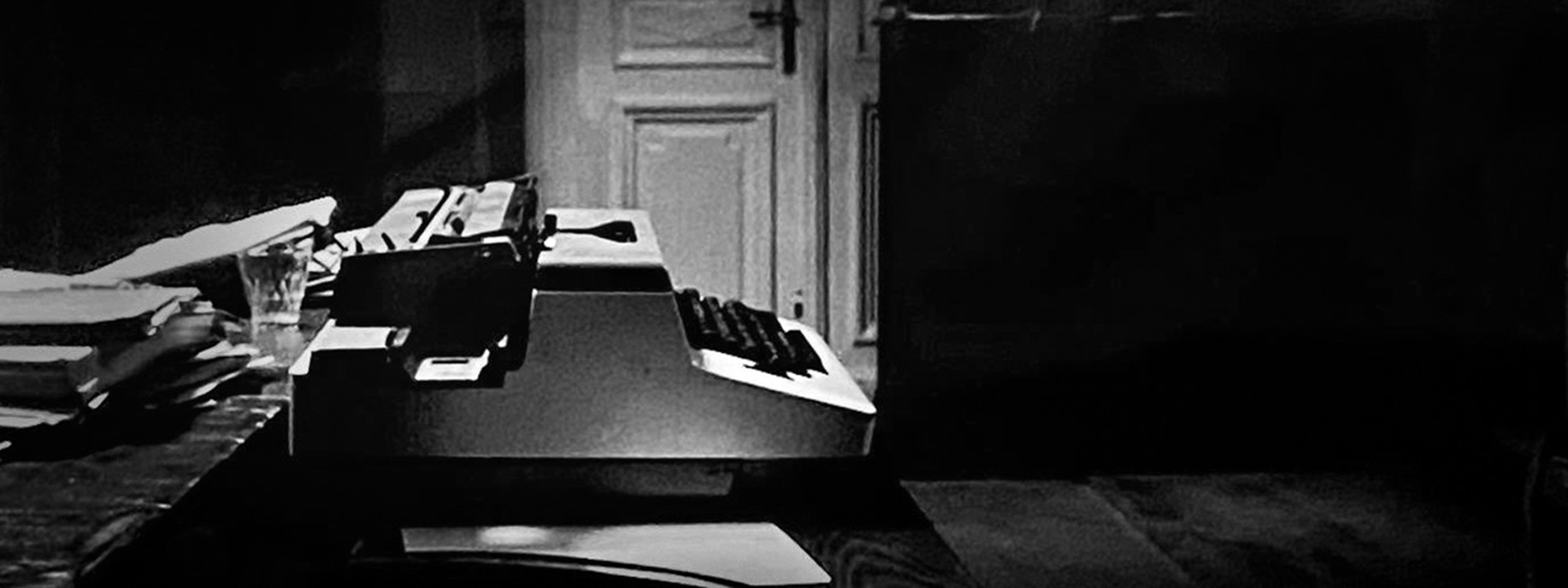
Here it is: tune up that guitar, fill up that pen, dust off that typewriter, and then – immerse. Immerse. Immerse. If not for you then for the world.

What I really thought about Nolan’s “The Odyssey” (contains spoilers)
This film has become more divisive than it needs to be. You’ve got the “I hate it” camp. The “greatest film of all time” camp. And the “meh” camp. I definitely didn’t hate it. I didn’t find it “meh” at all.
As for “greatest film of all time?” that changes pretty much week on week for me.
What’s it about
If you aren’t familiar with Homer’s 7th century allegorical poem of epic proportions, then good. At least you won’t be one of those people bemoaning the lack of historical accuracy in Nolan’s adaptation.
In short: it’s been ten years since the fall of Troy and Ithaca’s King and great hero, Odysseus, hasn’t returned.
Ashamed by the carnage he witnessed and wallowing in his own guilt, Odysseus delays his return, a decision that tests his mental, physical and spiritual strength, before finally washing up on Ithaca’s shores in rags to save his Kingdom from a group of cunning “suitors” waiting to pounce on his absence and snatch it from under his son and heir, Telemachus.
That just about summarises it anyway.
Nolan’s masterpiece
Apparently, Christopher Nolan was supposed to direct Troy some twenty years ago. But then Wolfgang Peterson, who developed the film, didn’t get his Batman V Superman movie green lit and so asked for Troy back.
Twenty years later, Nolan finally has his own Greek epic. And it. Is. Gorgeous.


Seriously who gives a shit about historical accuracy, when you’ve got shots like these (and more) that will leave you drooling?
Here’s what I loved about the film:
The cinematography is world class
The acting is world class
Ludwig Göransson’s score is world class
Nolan’s direction is world class
This on IMAX is world class
The storytelling is world class
Why it spoke to me
If you’ve seen any of my film club “reviews” you’ll know that I’m always looking for a story that resonates, regardless of the media.
The Odyssey was no exception.
Now I haven’t read the book (yet), but I did connect with Nolan’s world building and narrative.
Odysseus is all of us going through the motions in life. Just when we think we’ve done the right and dutiful thing in figuring out how to penetrate an impenetrable fortress, we quickly realise that that may not always be a good thing.
We tear down walls and watch as people descend to the level of beasts in their pursuit of lust and power, while we look on in despair, knowing that this was all our doing.
I remember once, at work, being asked by my boss to do something that would result in somebody else losing their job and being torn between having to do my duty and doing the right thing.
In the end, I couldn’t go through with the request and ended up walking away, which means I don’t see the ghost of a jobless colleague every day at 3AM.
And then, when trapped in a cave with a giant cyclops, just when we’ve figured out a way to escape and save lives, we decide to give our Ego a boost and take the beast down. It backfires, more lives are lost and we barely make it to safety.
It reminds me of a time when I participated in a pub quiz. We were top of the leaderboard and had the chance to double our points at the end. Double or nothing. You’d think finishing first would be enough, but we made the collective decision to keep playing and ended up losing all our points – and the title – to another team. Ouch.
Odysseus’ journey is transformative. In every conundrum, he has a decision to make as the leader of his men. And every decision has its own set of consequences. Do we continue out into sea and lose all men to a giant whirlpool? Or do we veer off course, brave another monster, but lose fewer men?
Can we overcome lust, gluttony, temptation and guilt to finally get to where we’d set out to in the first place?
Life itself is an Odyssey. It’s not always straight-forward. We may pick a course from A to B, but, often, we’ll meet unexpected challenges and obstacles that will test our resolve and throw us off course. And only when we go through these challenges, will we emerge on the other side as our best selves.
Is mainstream media influencing people’s perceptions?
I was out with a group of friends and one of them was talking about their experience with The Odyssey. According to them:
I can’t stand Tom Holland
Why is Helen of Troy black?
It was too long (see my post on phones and attention span)
It was historically inaccurate
Something about Anne Hathaway’s forehead
What’s up with the diverse cast
Why are none of them actually Greek
I’m sure there was more, but by this point I’d completely switched off. I’d read all this in a “critic’s” review of the film already. She’d regurgitated it almost word for word and when she was done, I asked her one simple question: “is that what you really thought of it?”
She looked at me, bemused, and said, “I mean, yes, like why do they cast…” snore.
Look, let me be honest with you. If you want to watch the film, go out and watch it. Form your own opinion. Look past the casting and the historical inaccuracy and embrace it for what it is.
It’s a Nolan film. It’s epic. It’s beautiful. The actors transform into the characters they play. In fact, I wrote a short verse about it:
This man they once called Bourne
He now dons the helmet of Odysseus
His taut frame sits in its armour
He strings bows like in the days of ardour
His wife, the beautiful and majestic Queen
His son, discovering his heritage still
Though in another world she dresses in prada
And he swings on a web from building to building
As for Eurylochus, we’ve seen him strum a guitar
And make people laugh
All this in another life
In this life, he serves as Odysseus’s right hand
The strings detach
The stage is gone
All that’s left is the fate of Ithaca
And the one hero that can bring her back to glory
No cameras. No rigging. No crew. No cast.
No lens to capture the fate of the ancient world.
Just a man who wants to get home, no matter what.
And that is the true Odyssey.
Yes there are other adaptations, each with its own merit. I haven’t seen the other ones (yet), but on its own, as a cinematic set piece, I can’t imagine a better version tailored for the big screen. The cyclops scene alone is worth making the trek to an IMAX theatre.
For me:
If you’d like to share your thoughts on the film, actual or otherwise, please do so in the comments. I’d love to hear what you (actually) think.

Phones – a global epidemic?
I’ve been thinking about how to write this post for a long time now. But what the heck, maybe I’ll just write and see where it goes.
My biggest problem, I think, is that I second guess myself too much. Will this be “academic” enough? Will it sound “intelligent” enough?
But this is a blog dammit, so who cares, these are my thoughts and I just want to put them down somewhere. So here goes.
I was at the hospital the other day and decided to run a wee experiment. I wanted to see a) how many people were on their phone at any given point and b) how long people could go for without getting their phone out.
There were 36 people in the waiting room for the hour and a half that I was there. 3 left and 3 came in, so the number remained 36 throughout. And these are my findings:
- At one point or another, all 36 people made use of a cell phone
- The longest a person lasted without using their cell phone was 20 minutes
I don’t think you can draw any serious conclusions from this. But it did get me thinking: have we become obsessed with our screens as a society?
My personal struggle with screen time
I can’t speak for the whole world. But I can speak from my own experience. I got my first cell phone when I was 13. My parents gifted me a Nokia 3310. It had a black and white screen, you could compose ringtones and play Snake.
Even without Instagram and other apps, I’d spend a lot of time on the phone, as did most of my peer group. I blame Snake for that.
Fast forward to today. We’re spoiled for choice. Apps, a new iPhone release every week (kidding, not kidding), 10000 mega pixel cameras (front and back) and easier access to phone data thanks to “bundles” and “deals” from sim providers.
Literally, anything can be done on a phone. Who needs the real world right? Want to connect with people, there’s WhatsApp. Want to compare lives? There’s Instagram. Want to get “influenced” by the latest trends, there’s YouTube (and YouTube Shorts). There’s Threads. Snapchat. Tik Tok. Viber. The list goes on and on and on. Again, who needs the real world?
I know I’m guilty of always having my phone on my person. If I sit still for a few minutes, I start to feel the itch. And when I feel the itch, I get my phone out. And here’s my usual app route:
- WhatsApp: who’s messaged, have I replied to everyone that’s sent me a message? Ooo, updates, who’s got things to share. Time: 3 to 5 minutes
- Instagram: let’s see what people are up to. Generic story 1. Generic story 2. Oh look, so and so went to Bali. Didn’t someone else post the same exact picture? Time: 8 to 10 minutes
- BBC Football: has anything changed in the last 1 hour since I last checked? Time: 4 to 6 minutes
- YouTube: shorts. Recently, Lionel Messi highlights, Beatles throwback, ancient Vedic traditions explained in an AI-generated voice, AI-generated “What-ifs” featuring Draco Malfoy. Time: 10 to 15 minutes.
- Repeat after 1 hour.
The issue
I ran a quick DuckDuckGo search and found a few stats on attention span. Here’s one that coincides almost perfectly with my aforementioned experiment:
The average attention span of adults over 60 is 18 minutes, compared to 22 minutes for adults 18-30, per a 2022 study in Neurobiology of Aging
Remember I mentioned that the longest a person lasted without using a phone was 20 minutes? Hmm, looks like this is coming off pretty “academic” already!
Here’s another stat that didn’t really surprise me:
The average work-related attention span is 2 hours, a 50% decrease from 4 hours in 2000, as reported in a 2023 study by Microsoft
But is phone use and social media to blame for this? I did take an econometrics module, but I’m not going to run a regression analysis on STATA here (still have PTSD from that). I will however, pull up this stat:
The average American spends 7 hours daily on digital media (excluding social media), reducing their attention span for non-digital tasks by 22%, per a 2023 study by Nielsen
Side note: if you are an academic and feel like I’m not doing this right, just let me know. It’s been a while since I did my Masters.
From what I’ve gathered, though, is that phone use – and consequentially social media – has contributed, in one way or another, to reduced attention spans. Conclusive or otherwise.
Personal observation
We can pull up stats all day and I’m sure somebody has run a regression analysis to establish causality between phone use and reduced attention span. But I don’t want to get too academic here (ironic).
So I’ll just draw on the power of observation to embolden my statement.
Before smart phones and apps, I used to be able to sit through five days of test cricket with my father. The year was 2000, before cell phones became mainstream. That means nobody at home had one.
The match was between South Africa and India. All the greats were playing from Tendulkar to Kallis. If you don’t know who they are, use your phone to look them up (joke).
It started at 11AM. Mum brought popcorn over to us. My kid brother had his building blocks out on the floor. Dad and I sat in full concentration, only stopping at drinks breaks, lunch, tea and – finally – when the day ended. 7 hours a day for 5 days, no distractions.
Today I can’t sit through a coffee with Dad without him checking his phone every 20 minutes or so. Not because there’s anything urgent happening. Not because he has to. So I asked him why and in his words: “what are you talking about, I’m not checking my phone.” Sigh.
The antidote
I don’t know what your experience with using a phone is like. But when I spend a lot of time on mine, I end up feeling mentally – and physically – drained.
When I use my phone before bed, I sleep poorly. When I use it first thing in the morning, I find that I can’t concentrate during the day.
You don’t need a stat for this. You just need a little bit of self awareness to gauge how you feel before, during and after cell phone use.
Over the last couple of weeks, I’ve made the conscious decision to reduce screen time. Here are a few practical things that have helped with this (yes you’ve probably seen a thousand of these on YouTube and Instagram):
- No phone use for the first hour of the day
- Phone use restricted to “office” hours: 30 minutes mid-morning, 30 minutes in the evening
- Deleted distracting apps (YouTube, Instagram)
- Phone charges in another room, so it’s out of sight and out of mind
- Phone has been set up to allow only certain people to call and message if they really need to get through
To help things along, I’ve also started tracking the following data:
- Number of non-intentional phone pick ups: how many times do I check my phone without an intention?
- Screen time
What about “raw-doggin”?
That’s not a sexual reference. That basically means doing absolutely fuck all for a specific period of time. Like when you’re on a long flight and you don’t watch or read anything. You just sit for the duration of the flight, with your thoughts and nothing else.
I’m also trying to make “raw-doggin” a part of my day to day. I’ve started with a 5 minute exercise every morning, where I just sit still and stare at a blank wall.
“5 minutes? So little?”
If you’ve read Atomic Habits like the rest of the world, you’ll understand the power of compounding tiny habits over a prolonged period of time.
My plan is to increase this by a minute every week until it pretty much becomes my entire existence. By then we’ll have iPhone 100 and I won’t be buying it.
Final thoughts
I’m not trying to say that cell phones are bad or good. Used in moderation and with the right intention, I don’t really see the harm.
But when we actually start looking up from the screen, we begin to notice the world in greater detail. Colours appear more vivid. People appear more interesting. We see movement. We see life.
And, to me at least, things are definitely more interesting off screen. So maybe it’s time to start living more intentionally. How’s that for being academic?