I’ve been thinking about how to write this post for a long time now. But what the heck, maybe I’ll just write and see where it goes.
My biggest problem, I think, is that I second guess myself too much. Will this be “academic” enough? Will it sound “intelligent” enough?
But this is a blog dammit, so who cares, these are my thoughts and I just want to put them down somewhere. So here goes.
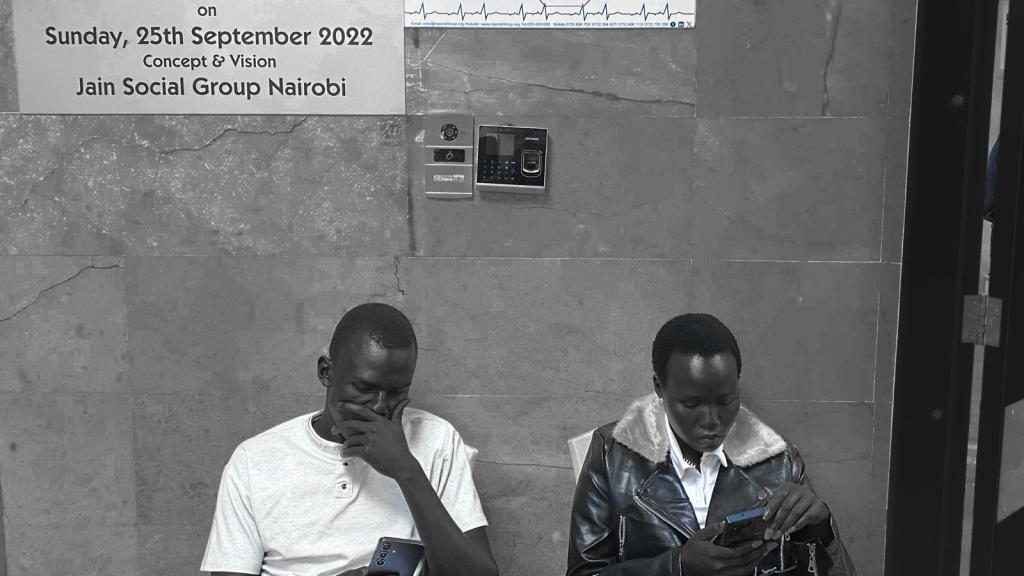
I was at the hospital the other day and decided to run a wee experiment. I wanted to see a) how many people were on their phone at any given point and b) how long people could go for without getting their phone out.
There were 36 people in the waiting room for the hour and a half that I was there. 3 left and 3 came in, so the number remained 36 throughout. And these are my findings:
- At one point or another, all 36 people made use of a cell phone
- The longest a person lasted without using their cell phone was 20 minutes
I don’t think you can draw any serious conclusions from this. But it did get me thinking: have we become obsessed with our screens as a society?
My personal struggle with screen time
I can’t speak for the whole world. But I can speak from my own experience. I got my first cell phone when I was 13. My parents gifted me a Nokia 3310. It had a black and white screen, you could compose ringtones and play Snake.
Even without Instagram and other apps, I’d spend a lot of time on the phone, as did most of my peer group. I blame Snake for that.
Fast forward to today. We’re spoiled for choice. Apps, a new iPhone release every week (kidding, not kidding), 10000 mega pixel cameras (front and back) and easier access to phone data thanks to “bundles” and “deals” from sim providers.
Literally, anything can be done on a phone. Who needs the real world right? Want to connect with people, there’s WhatsApp. Want to compare lives? There’s Instagram. Want to get “influenced” by the latest trends, there’s YouTube (and YouTube Shorts). There’s Threads. Snapchat. Tik Tok. Viber. The list goes on and on and on. Again, who needs the real world?
I know I’m guilty of always having my phone on my person. If I sit still for a few minutes, I start to feel the itch. And when I feel the itch, I get my phone out. And here’s my usual app route:
- WhatsApp: who’s messaged, have I replied to everyone that’s sent me a message? Ooo, updates, who’s got things to share. Time: 3 to 5 minutes
- Instagram: let’s see what people are up to. Generic story 1. Generic story 2. Oh look, so and so went to Bali. Didn’t someone else post the same exact picture? Time: 8 to 10 minutes
- BBC Football: has anything changed in the last 1 hour since I last checked? Time: 4 to 6 minutes
- YouTube: shorts. Recently, Lionel Messi highlights, Beatles throwback, ancient Vedic traditions explained in an AI-generated voice, AI-generated “What-ifs” featuring Draco Malfoy. Time: 10 to 15 minutes.
- Repeat after 1 hour.
The issue
I ran a quick DuckDuckGo search and found a few stats on attention span. Here’s one that coincides almost perfectly with my aforementioned experiment:
The average attention span of adults over 60 is 18 minutes, compared to 22 minutes for adults 18-30, per a 2022 study in Neurobiology of Aging
Remember I mentioned that the longest a person lasted without using a phone was 20 minutes? Hmm, looks like this is coming off pretty “academic” already!
Here’s another stat that didn’t really surprise me:
The average work-related attention span is 2 hours, a 50% decrease from 4 hours in 2000, as reported in a 2023 study by Microsoft
But is phone use and social media to blame for this? I did take an econometrics module, but I’m not going to run a regression analysis on STATA here (still have PTSD from that). I will however, pull up this stat:
The average American spends 7 hours daily on digital media (excluding social media), reducing their attention span for non-digital tasks by 22%, per a 2023 study by Nielsen
Side note: if you are an academic and feel like I’m not doing this right, just let me know. It’s been a while since I did my Masters.
From what I’ve gathered, though, is that phone use – and consequentially social media – has contributed, in one way or another, to reduced attention spans. Conclusive or otherwise.
Personal observation
We can pull up stats all day and I’m sure somebody has run a regression analysis to establish causality between phone use and reduced attention span. But I don’t want to get too academic here (ironic).
So I’ll just draw on the power of observation to embolden my statement.
Before smart phones and apps, I used to be able to sit through five days of test cricket with my father. The year was 2000, before cell phones became mainstream. That means nobody at home had one.
The match was between South Africa and India. All the greats were playing from Tendulkar to Kallis. If you don’t know who they are, use your phone to look them up (joke).
It started at 11AM. Mum brought popcorn over to us. My kid brother had his building blocks out on the floor. Dad and I sat in full concentration, only stopping at drinks breaks, lunch, tea and – finally – when the day ended. 7 hours a day for 5 days, no distractions.
Today I can’t sit through a coffee with Dad without him checking his phone every 20 minutes or so. Not because there’s anything urgent happening. Not because he has to. So I asked him why and in his words: “what are you talking about, I’m not checking my phone.” Sigh.
The antidote
I don’t know what your experience with using a phone is like. But when I spend a lot of time on mine, I end up feeling mentally – and physically – drained.
When I use my phone before bed, I sleep poorly. When I use it first thing in the morning, I find that I can’t concentrate during the day.
You don’t need a stat for this. You just need a little bit of self awareness to gauge how you feel before, during and after cell phone use.
Over the last couple of weeks, I’ve made the conscious decision to reduce screen time. Here are a few practical things that have helped with this (yes you’ve probably seen a thousand of these on YouTube and Instagram):
- No phone use for the first hour of the day
- Phone use restricted to “office” hours: 30 minutes mid-morning, 30 minutes in the evening
- Deleted distracting apps (YouTube, Instagram)
- Phone charges in another room, so it’s out of sight and out of mind
- Phone has been set up to allow only certain people to call and message if they really need to get through
To help things along, I’ve also started tracking the following data:
- Number of non-intentional phone pick ups: how many times do I check my phone without an intention?
- Screen time
What about “raw-doggin”?
That’s not a sexual reference. That basically means doing absolutely fuck all for a specific period of time. Like when you’re on a long flight and you don’t watch or read anything. You just sit for the duration of the flight, with your thoughts and nothing else.
I’m also trying to make “raw-doggin” a part of my day to day. I’ve started with a 5 minute exercise every morning, where I just sit still and stare at a blank wall.
“5 minutes? So little?”
If you’ve read Atomic Habits like the rest of the world, you’ll understand the power of compounding tiny habits over a prolonged period of time.
My plan is to increase this by a minute every week until it pretty much becomes my entire existence. By then we’ll have iPhone 100 and I won’t be buying it.
Final thoughts
I’m not trying to say that cell phones are bad or good. Used in moderation and with the right intention, I don’t really see the harm.
But when we actually start looking up from the screen, we begin to notice the world in greater detail. Colours appear more vivid. People appear more interesting. We see movement. We see life.
And, to me at least, things are definitely more interesting off screen. So maybe it’s time to start living more intentionally. How’s that for being academic?
 Just Me Lakhani